A French twist looks simple on the surface, but for importers, brand owners, salon suppliers, and fashion accessory wholesalers, the product behind that hairstyle is not simple at all. The wrong pin shape, weak spring, rough edge, or inconsistent plating can turn an elegant updo accessory into a high-return item. Buyers developing collections around French-inspired updo hairstyles often need more than a pretty sample. They need dependable grip strength, repeatable color matching, retail-ready packaging, and a supplier that understands how different materials behave in real production.
This is why the category of hair accessory for French twist has become a useful niche within broader hair accessories. It includes U pins, hair pins, barrettes, claw clips, combs, bobby pins, and decorative pieces designed to hold or accent twisted hairstyles. These products may appear trend-driven, but B2B sourcing decisions are usually based on practical concerns: comfort, hold, finish quality, MOQ, and whether the supplier can scale from sample development to bulk production without losing consistency. For buyers building private label assortments, a well-planned French twist accessory line can also connect naturally with broader categories such as hair accessories, claw clips, scrunchies, and occasion hair pieces available through https://blaccessory.com/.
Why French Twist Hair Accessories Matter in Wholesale Collections
Demand for elevated everyday styling has helped classic updo accessories stay relevant across fashion retail, gift channels, salon resale, and occasionwear programs. While editorials may highlight how These Hair Pins create effortlessly chic looks, wholesale buyers need to translate trend appeal into stable product specifications. A French twist is worn for work, events, weddings, and formal styling, so the accessory category serves multiple sales channels rather than one narrow customer segment.
From a sourcing perspective, this segment matters because it sits between function and fashion. Unlike purely decorative hair bows or trend-led novelty clips, a French twist accessory must perform mechanically. It needs to hold different hair densities, work with straight or textured hair, and remain comfortable during wear. At the same time, it must support a design story through material choice, shape, color, pearl details, rhinestone accents, or premium plating.
B2B buyers typically evaluate this niche for five reasons:
- It supports premium positioning with relatively compact products and efficient packaging.
- It can be sold as a single hero item or as part of coordinated display sets.
- It fits year-round assortments, unlike highly seasonal holiday accessories.
- It allows broad material flexibility, from metal pins to acetate combs and resin clips.
- It offers easy extension into related updo hairstyles accessories such as combs, barrettes, claw clips, and decorative pins.
Neutral market references from sources such as Statista and FashionUnited often point to continued interest in fashion accessories and occasion-led styling, even when exact subcategory numbers vary by region. For overseas buyers, that means French twist accessories are best viewed not as a one-item trend, but as part of a curated styling collection with repeat reorder potential.
Another practical point is channel segmentation. A salon supplier may prioritize grip and durability. A fashion retailer may care more about acetate patterning and card presentation. An e-commerce private label brand may require barcode-ready hanging cards and consistent photography samples. Buyers who understand these distinctions early usually reduce development delays later.
Material and Product Options for French Twist Accessories
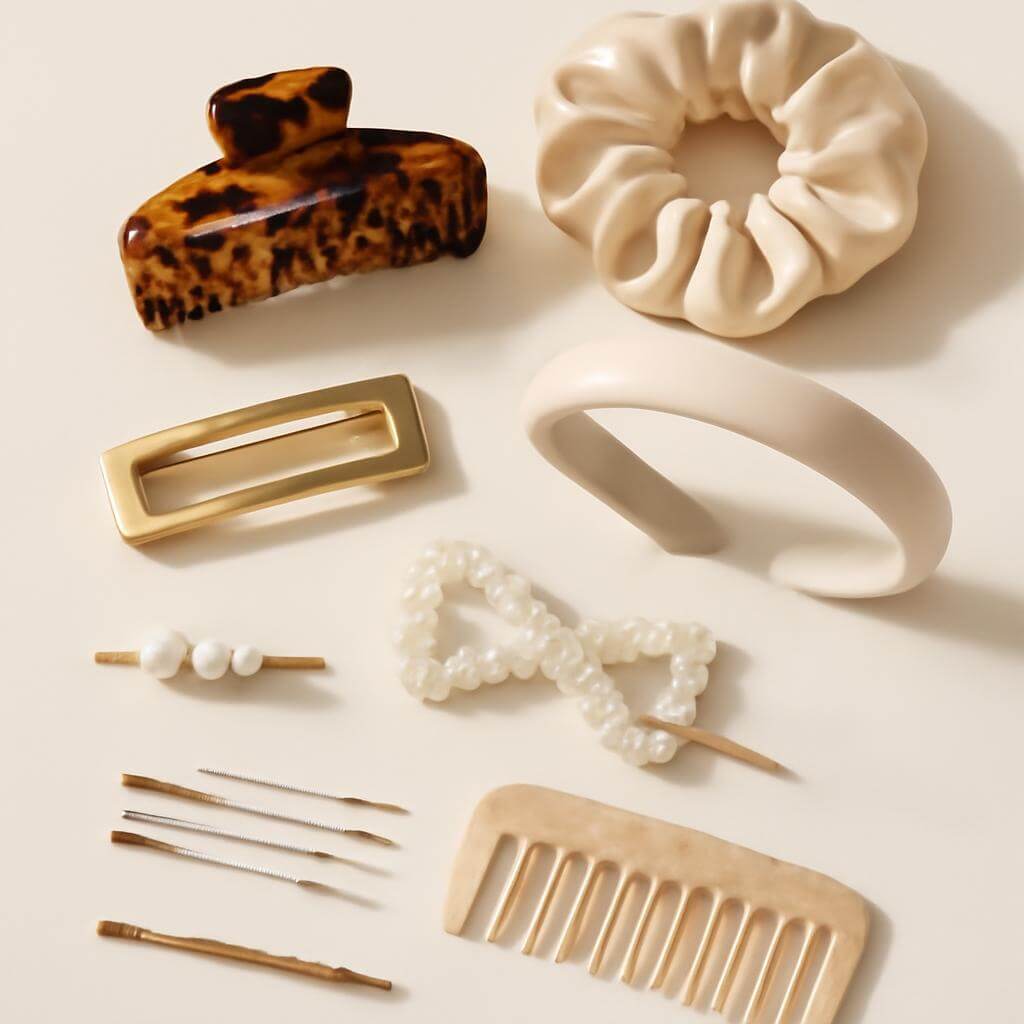
When buyers search for the best hair accessory for French twist, they are rarely looking for one universal item. They are selecting among several product structures depending on hairstyle use, target price, packaging format, and end customer preference. In wholesale programs, the most common options include French U pins, classic bobby pins, curved hair pins, side combs, French twist clips, claw clips adapted for twist styling, and decorative barrettes that finish the look after the hair is secured.
Metal remains one of the most important materials in this category because hold depends on spring memory, wire gauge, and surface finishing. For U pins, hair pins, and bobby pins, buyers should review:
- Metal thickness and resilience
- Tip coating smoothness to avoid scalp scratching
- Plating consistency in gold, silver, gunmetal, rose gold, or matte finishes
- Resistance to paint peeling or oxidation during wear
Acetate and resin are commonly used when the French twist accessory is more decorative, such as combs, curved clips, and premium barrettes. These materials offer stronger visual differentiation through tortoise patterns, marbled effects, translucent colors, and polished surfaces. They are especially suitable for fashion retailers that want a refined look with stronger shelf appeal. However, buyers should confirm thickness tolerance and tooth smoothness on comb designs, because brittle edges or uneven polishing can lead to breakage or customer complaints.
Plastic is often selected for entry-level clips or lightweight styling tools. It supports lower cost targets and broad color customization, but mold quality becomes a key issue. If a buyer wants a French twist claw clip long hair format or a French twist clip for thick hair, the clip must be tested for hinge durability, spring strength, and tooth alignment. Weak mold structure may look acceptable in a showroom sample but fail after repeated use.
Textile-based materials also play a role. Satin, velvet, and organza are frequently used on wrapped headbands, bows, or decorative overlays added to combs and barrettes for occasionwear collections. These do not replace the structural holding component, but they increase value perception and coordinate with bridal, party, or gifting themes. Faux pearl and rhinestone embellishments are also widely used, especially for vintage French hair pin concepts or formal updo styles. In these items, adhesive performance and stone placement quality are central QC checkpoints.
Buyers developing a complete assortment often combine several of the following:
- Metal U pins for minimalist updo uses
- Decorative pins with pearl or rhinestone tops
- French twist combs for salon and formal styling
- Barrettes that secure the twist externally
- Claw clips designed for quick twist hairstyles
- Bobby pin sets packed on display cards for value retail
One sourcing insight many buyers overlook is hair-type fit. A product that performs well for fine hair may not hold thick or layered hair. It is useful to request sample sets in different sizes or tension levels rather than one standard specification. This helps brands build clearer merchandising language and reduces returns tied to performance mismatch.
Customization, Packaging, and Private Label Development
For buyers developing private label accessory lines, customization is often what turns a basic updo item into a differentiated retail product. A French twist accessory may be small, but it offers multiple branding surfaces and packaging opportunities. Q&N Fashion Accessory can support development programs that combine functional design with presentation details, especially for importers and brands planning coordinated hair collections.
The most common customization options include custom colors, logo plates, engraved metal tags, woven labels on textile accessories, custom molds for signature shapes, and curated display sets that combine pins, combs, or clips in one package. For metal pieces, color customization may focus on plating tone and finish texture. For acetate, resin, and plastic pieces, buyers usually request Pantone-aligned colors, transparent effects, marbling, or seasonal palettes.
Packaging should be planned as early as sampling, not after production approval. In this category, popular retail packaging formats include display cards, retail hanging cards, OPP bags, gift boxes, and barcode labels. The right format depends on channel strategy:
- Display cards work well for mass retail, chain stores, and easy shelf replenishment.
- Gift boxes are more suitable for premium sets and occasion collections.
- OPP bags support efficient bulk packing and lower unit cost for promotional or online sales.
- Retail hanging cards help visibility for compact products like bobby pins and U pins.
Another important B2B decision factor is set composition. Some buyers sell single pieces, while others prefer 2-pack, 3-pack, or mixed-material gift sets. A single polished acetate comb may fit a boutique assortment, while a mass retailer may prefer a value-focused set combining These Hair Pins, bobby pins, and a decorative barrette under one SKU. Packaging dimensions, insert layout, and barcode position should be confirmed before bulk order approval so the product is ready for distribution without relabeling delays.
MOQ and mold cost also influence customization strategy. If a buyer wants a fully custom French twist clip or a new ornamental pin head, custom tooling may be required. For smaller launches, adapting an existing base shape with new plating, pearl application, or packaging often offers a better cost-to-speed balance. This is especially useful for testing color stories or regional preferences before investing in exclusive molds.
Reorder consistency is another area where good private label suppliers add value. If a buyer launches a successful updo collection, the next challenge is not design but matching the original color, card stock, logo placement, and finish. Q&N Fashion Accessory should be evaluated on whether it can document approved standards, keep sample references, and control variation across repeat orders. Buyers can explore broader sourcing capabilities through https://blaccessory.com/hair-accessories/ and the main company site at https://blaccessory.com/.
How Buyers Should Evaluate Hair Accessory Suppliers for French Twist Programs
Choosing a supplier for French twist accessories is less about finding the lowest quote and more about reducing hidden risk. Small products can still create costly problems if plating fades, springs weaken, stones fall off, or card packaging arrives with inconsistent printing. Serious buyers usually evaluate suppliers through a combination of sample quality, process transparency, and reorder discipline.
The first area to review is MOQ structure. Some suppliers offer low MOQ only on stock colors and standard packaging, while custom colors or logo applications require a higher threshold. Buyers should ask for MOQ by SKU, by color, and by packaging type. This matters because a French twist range often includes multiple finishes or display variants, and the true order minimum may be higher than the initial quotation suggests.
Second is sample approval. A good sample process should cover more than visual confirmation. Buyers should test grip strength, comfort, pin alignment, plating smoothness, hinge durability for clips, and embellishment security for pearl or rhinestone styles. If the product is intended for thick hair or salon use, stronger wear testing is necessary. Asking for pre-production samples after final packaging approval helps avoid mismatch between development sample and bulk output.
Third is lead time clarity. Hair accessories often involve mixed processes such as molding, plating, polishing, fabric wrapping, stone setting, card printing, and assembly. Each step can affect the final timeline. Buyers should confirm lead time separately for sampling, pre-production confirmation, mass production, and packaging completion. During seasonal programs, realistic planning matters more than optimistic promises.
Fourth is QC methodology. In this category, practical inspection points include spring tension, scratch-free surfaces, burr removal, plating adhesion, color consistency, glue cleanliness, logo placement, packaging count accuracy, and drop-test suitability for boxed sets. A supplier that can explain its in-line and final QC process usually gives buyers more confidence than one that only says the goods will be checked before shipment.
Fifth is communication around replacement risk. Since French twist items are small, any defect ratio can affect a large number of pieces. Buyers should clarify how the supplier handles bulk variation, what tolerance standards are used, and whether packing photos or production records are available. When comparing wholesale accessory suppliers, this level of process detail often matters more than a small difference in unit price.
It is also sensible to review category breadth. Buyers that start with one hair accessory for French twist often expand into adjacent items such as headbands, scrunchies, claw clips, and bows. A supplier with a wider hair accessory range can help create coordinated color stories and packaging systems, reducing sourcing fragmentation across multiple factories.
Strategic Recommendations for Importers, Brands, and Wholesale Buyers
For buyers entering this niche, the most effective strategy is to build a French twist assortment around clear end-use segments instead of one generic item. A practical line may include a minimalist metal pin set, a premium acetate or resin decorative piece, and a formalwear option with faux pearl or rhinestone accents. This approach allows price laddering while keeping the collection coherent.
It is also wise to align materials with sales channel expectations. Mass retail may favor plastic or basic metal formats with efficient card packaging. Boutiques often respond better to acetate, resin, satin, or velvet detailing. Salon and professional channels usually require stronger hold and repeat performance over decorative complexity.
Three buyer decision factors should remain central throughout sourcing:
- Whether the accessory truly holds the intended hair type and styling use
- Whether the packaging format matches the retailer’s merchandising system
- Whether the supplier can deliver stable quality on repeat orders, not just the first sample batch
Another recommendation is to request a mini range rather than a single prototype. Comparing two or three material options side by side makes it easier to judge price positioning, grip strength, and visual finish. For example, buyers can compare a metal U pin, an acetate side comb, and a decorative barrette to decide which item best fits the target customer. This also helps internal teams from merchandising, sourcing, and packaging make decisions faster.
A supplier such as Q&N Fashion Accessory can support buyers that want to combine product development with retail presentation, especially when French twist accessories are part of a larger private label hair line. Rather than treating the item as a one-off trend piece, buyers should develop it as part of a broader collection architecture that includes updo uses, occasion styling, and everyday hairstyles. More information about available category scope can be reviewed at https://blaccessory.com/.
Frequently Asked Questions
What clip do you use for a French twist?
In wholesale sourcing, the answer depends on the intended customer and hairstyle hold requirement. Common options include French twist clips, curved barrettes, side combs, claw clips adapted for twist styling, and metal U pins used together with decorative outer pieces. For thick hair, buyers often prefer stronger clips with reinforced springs or larger comb structures. For minimalist styling, slim metal pins or bobby pin sets are often the better option. When selecting a clip, B2B buyers should test grip strength, comfort, hinge quality, and the size range needed for different hair volumes.
What is the hair tool for French twist?
The hair tool for a French twist can refer to several products rather than one item. In the hair accessories trade, it may include U pins, bobby pins, twist combs, banana-style clips, and decorative barrettes that finish the updo after securing the hair internally. For private label brands, the choice usually depends on whether the product is sold as a functional styling tool, a fashion accessory, or a giftable set. Suppliers should be able to offer different material options such as metal, resin, plastic, and acetate depending on price target and design direction.
How do I put my hair in a French twist?
End users generally gather the hair, twist it upward, tuck the ends inward, and secure it with pins, a comb, or a clip. From a B2B perspective, this question matters because the accessory must support easy use. Buyers should ask whether the product is intended for quick everyday use, formal occasions, or salon styling. A beginner-friendly French twist accessory usually needs balanced tension, smooth edges, and intuitive placement. If packaging is retail-facing, adding an instruction card or simple usage graphic can improve sell-through and reduce customer confusion.
What are those French hair clips called?
The term can refer to French twist clips, French barrettes, side combs, claw clips used for twist hairstyles, or French U pins. Naming varies by market, so importers should align product naming with retailer search behavior and packaging language. For example, one retailer may classify the same item under hair clips, while another places it under updo accessories or hair pins. Clear naming helps avoid catalog confusion and supports better search visibility for keywords such as French, Hair, Pins, Accessory, and Updo Hairstyles.
What should buyers check before placing a bulk order for French twist hair accessories?
Before approving a bulk order, buyers should review material selection, sample approval, packaging construction, MOQ, lead time, and QC checkpoints. On the product side, inspect grip strength, finishing quality, plating consistency, tooth alignment on combs, glue performance on pearl or rhinestone items, and comfort against the scalp. On the packaging side, verify display card dimensions, barcode position, logo application, and carton packing count. It is also useful to confirm color tolerance and keep a sealed reference sample for reorder comparison.
Can a supplier support private label French twist accessories with packaging and mixed assortments?
Yes, many B2B buyers prefer suppliers that can combine product development with card packaging, logo customization, and coordinated display formats. This is especially useful when building a broader collection that includes claw clips, headbands, scrunchies, bows, and pins in matching colors. Buyers looking for this type of support can review the broader category range at https://blaccessory.com/hair-accessories/ or start from https://blaccessory.com/ to assess whether the supplier’s hair accessory capabilities match their private label program.