Why Cosmetic Bag Logo Methods Matter
The beauty and personal care market is increasingly premium, visual, and gift-driven. Grand View Research estimates the U.S. beauty and personal care products market at USD 109.56 billion in 2025 and projects it to reach USD 196.33 billion by 2033. As brands compete across retail, travel, subscription, and direct-to-consumer channels, a reusable pouch becomes part of the brand experience rather than secondary packaging. [External source: Grand View Research]
A logo method affects more than appearance. It changes tooling, sample lead time, unit cost, reject risk, packaging protection, and the range of colors that can be reproduced. A large one-color screen print may be inexpensive on polyester but unsuitable on deeply textured velvet. A metal plate may look premium but can add mold fees, plating approvals, and scratch risks. A good sourcing decision balances brand impact with manufacturing reality.
| Requirement | Buyer Question | Risk if Unclear |
|---|---|---|
| Artwork fidelity | Can the process hold fine text and negative space? | Blurred or filled-in details |
| Material compatibility | Will ink, foil, thread, or hardware bond correctly? | Peeling, cracking, puckering |
| Durability | Will it survive abrasion, flexing, and cleaning? | Early brand damage |
| Positioning | Does the finish support the target retail price? | Logo looks too cheap or too heavy |
| Cost and MOQ | Are screens, dies, molds, and setup economical? | Unexpected development cost |
| Compliance | Are inks, coatings, and metals suitable for the market? | Testing failure or shipment delay |
Printed Cosmetic Bag Logo Methods
Screen Printing
Screen printing pushes ink through a prepared mesh stencil onto the bag material. It is one of the most common logo methods for polyester, nylon, canvas, cotton, nonwoven fabric, some PU surfaces, and selected PVC or TPU grades. It works especially well for bold logos with one to three solid colors.
The process is cost-effective at volume because the screen setup is spread across the order. It can achieve strong opacity, including white or metallic-looking ink on dark materials, when the correct ink system and number of passes are used. However, fine gradients and photographic detail are limited. Ink adhesion depends on surface treatment, coating chemistry, curing conditions, and storage.
Heat Transfer
Heat-transfer printing applies a prepared graphic using heat and pressure. The transfer may be a printed film, vinyl-like cut material, or specialized ink system. It supports multiple colors, gradients, small text, and short-run flexibility. It is useful for polyester, nylon, coated fabrics, and some PU surfaces when temperature compatibility is confirmed.
The main risk is edge lifting or cracking after flexing. A thick transfer can feel like a sticker and may reduce the premium appearance of a soft pouch. Heat can also mark PU, flatten velvet, shrink synthetic fabric, or distort clear film. The full transfer must be tested on the final material.
Digital or Sublimation Printing
Digital printing supports complex artwork and low setup quantities. Sublimation is particularly effective on suitable polyester fabrics because the dye becomes part of the textile rather than sitting as a thick surface layer. It is ideal for all-over prints, gradients, photographic patterns, and coordinated collections.
Sublimation generally requires a light polyester base and cannot print an opaque white. Direct digital systems vary by material. For a small isolated logo, digital printing may be unnecessary unless the artwork contains many colors or fine details.
| Method | Best Artwork | Color Capability | Hand Feel | Typical Risk |
|---|---|---|---|---|
| Screen print | Bold vector logo | Solid spot colors | Thin to medium ink layer | Poor adhesion or cracking |
| Heat transfer | Multicolor detail and gradients | Broad | Film-like unless very thin | Edge lifting and heat marks |
| Sublimation | All-over art and photography | Broad on light polyester | Very soft | Color shift and no opaque white |
| Direct digital | Detailed short-run graphics | Broad | Process dependent | Inconsistent adhesion by substrate |
Foil-Stamped Logos
How Foil Stamping Works
Foil stamping uses a heated die to press a pigmented or metallic foil onto the material. Gold, silver, rose gold, holographic, matte, and colored foils are available. The process is widely used on PU leather, smooth coated fabrics, paper packaging, and selected synthetic materials.
Advantages
Foil creates a thin, reflective mark with strong premium appeal. It is lighter and less expensive than a metal plate and works well for small wordmarks, monograms, and clean line art. A branded die can often be reused for repeat orders when the logo size remains unchanged.
Limitations
Foil is sensitive to surface texture, heat, pressure, and material chemistry. Deep PU grain creates broken coverage. Soft foam-backed PU may emboss too deeply. Highly flexible surfaces can crack the foil. Metallic shades also vary by supplier and batch. A “gold foil” instruction should include an approved physical foil swatch.
Best Applications
- Smooth or fine-grain PU cosmetic pouches
- Premium velvet or coated-paper gift packaging with confirmed compatibility
- Small front-center or corner wordmarks
- Beauty gift sets requiring a metallic accent without heavy hardware
Embroidered Logos
Direct Embroidery
Direct embroidery stitches the logo through the bag panel. It offers tactile value and strong durability on canvas, cotton, polyester, nylon, velvet, terry, quilted fabric, and denim. It can communicate craft, softness, heritage, or premium quality.
The embroidery file must be digitized into stitch instructions. Fine text, thin lines, tight corners, and small negative spaces may not reproduce cleanly. Stabilizer is often needed behind soft or stretchy material. Dense stitching can pucker lightweight fabric or create a stiff patch inside the bag.
Embroidered Patches
A patch is embroidered separately and sewn, heat-applied, or bonded to the bag. It allows greater control and can cover materials that are difficult to place in an embroidery frame. Patches also support merrowed borders, woven details, and layered branding. The attachment method must be durable and visually appropriate.
Advantages and Limitations
Embroidery withstands normal abrasion better than many surface prints and retains a premium textile character. It is less suitable for photographic detail, extremely small logos, transparent films, or ultra-light materials. Thread color can be matched directionally, but polyester embroidery thread reflects light differently from the shell.
Metal Logo Plates
Construction Options
Metal plates can be stamped, cast, etched, engraved, embossed, debossed, laser-marked, or printed. They may use zinc alloy, brass, stainless steel, or aluminum depending on shape, weight, finish, and budget. Attachment methods include prongs, rivets, screws, stitching holes, and adhesive systems.
Advantages
A metal plate creates strong perceived value, clear dimensional branding, and coordination with zipper pullers and other hardware. It can carry fine engraving and is especially effective on PU, velvet, padded nylon, and structured vanity bags.
Limitations
Custom plates normally require a mold, die, or setup charge. Small quantities carry a higher unit cost. Metal adds weight and may scratch during production or shipping. Prongs can damage lining or create sharp points if not covered. Plating colors may differ from zipper sliders because different suppliers and substrates are involved.
For EU or U.S. programs, buyers should specify chemical and heavy-metal requirements appropriate to the intended use. A generic statement such as “safe metal” is not a test plan. The supplier should know the base metal, plating stack, lacquer, and attachment construction.
| Method | Visual Positioning | Relative Cost | MOQ Sensitivity | Durability | Best Materials |
|---|---|---|---|---|---|
| Screen print | Value to premium | Low | Low to medium | Good with correct ink | Fabric, selected PU/PVC |
| Heat transfer | Contemporary and graphic | Low to medium | Low | Medium to good | Polyester, nylon, selected PU |
| Foil stamping | Premium | Medium | Medium due to die | Medium | Smooth PU and coated surfaces |
| Embroidery | Craft and premium textile | Medium | Low to medium | High | Woven and pile fabrics |
| Metal plate | Luxury and dimensional | High | High due to tooling | High if protected | PU, velvet, padded and structured bags |
How to Match Cosmetic Bag Logo Methods to Materials
Polyester and Nylon
Screen print, heat transfer, embroidery, woven labels, and metal plates are common. Coatings can reduce ink adhesion, so pretreatment and ink selection matter. Lightweight nylon may pucker under dense embroidery.
Canvas and Cotton
These materials accept screen print and embroidery well. Natural texture gives a casual or premium craft appearance but can break fine print detail. Wash and colorfastness expectations should be defined.
PU Leather
Foil, embossing, debossing, screen print, patches, and metal plates are suitable when the coating tolerates heat and pressure. Always test because visually similar PU grades can react differently.
PVC and TPU
Screen print and selected heat-transfer systems may work after surface treatment. Welding can also incorporate embossed branding or attached patches made from compatible film. Solvent resistance, migration, flexibility, and adhesion require testing.
Velvet, Terry, and Textured Fabrics
Embroidery, woven labels, patches, and metal plates usually outperform flat printing because pile interrupts ink contact. Foil can work on selected short-pile materials but needs a production trial.
| Buyer Priority | First Choice | Alternative |
|---|---|---|
| Lowest unit cost | One-color screen print | Woven label |
| Luxury metallic look | Foil stamp | Metal plate |
| Highest textile durability | Embroidery | Woven patch |
| Photographic artwork | Sublimation or digital transfer | Printed fabric panel |
| Very textured material | Embroidery or metal plate | Patch |
| Transparent film | Compatible screen print | Welded or sewn label patch |
Artwork and Tech-Pack Requirements
Provide vector artwork in AI, EPS, SVG, or editable PDF format. Convert fonts to outlines and identify the intended logo dimensions. A logo that works at 80 mm may not reproduce at 25 mm. Ask the supplier to recommend minimum line thickness and negative-space width for the selected process.
- State logo method and backup method.
- Provide exact width, height, and position from fixed bag edges.
- Provide Pantone or physical color references.
- Define metallic finish, gloss, grain, or plating.
- Identify whether the logo may be scaled.
- Show acceptable and unacceptable artwork simplification.
- Approve a physical strike-off before the full sample when risk is high.
Logo Quality Tests
| Test | Print/Transfer | Foil | Embroidery | Metal Plate |
|---|---|---|---|---|
| Dry/wet rub | Essential | Useful | Thread colorfastness | Finish rub |
| Tape adhesion | Useful | Useful | Not applicable | For printed coating |
| Flex test | Cracking and peeling | Cracking | Puckering and thread break | Attachment movement |
| Abrasion | Ink wear | Foil wear | Thread fuzzing | Scratch and plating wear |
| Pull test | Not primary | Not primary | Stitch security | Prong/rivet security |
| Aging | Migration and yellowing | Adhesion loss | Color shift | Corrosion and lacquer change |
ASTM provides textile abrasion standards and notes that abrasion results depend on fiber, yarn, construction, treatment, pressure, and the selected abradant. That principle is important for logo testing: a result is meaningful only when the method reflects the product’s use. [External source: ASTM abrasion guidance]
How Logo Method Changes Cost and MOQ
Logo cost has three layers: one-time setup, unit conversion, and secondary handling. Screen printing may require one screen per color plus ink mixing and curing. Foil stamping requires a die and setup but has a low material cost per impression. Embroidery is driven by stitch count, thread changes, hooping, and stabilizer. Metal plates add tooling, casting or stamping, plating, attachment, reinforcement, inspection, and protective packing.
Ask suppliers to quote the logo separately at several quantities. A metal plate may add only a modest amount at 10,000 pieces after tooling is amortized but be uneconomical at 300 pieces. A one-color screen print may remain efficient across a broad range. A digital transfer can be attractive for a small launch but cost more than screen printing on a repeat order. The “lowest MOQ” and “lowest total cost” are often different answers.
Production Controls That Prevent Logo Variation
For printing and foil, factories should use position guides or jigs, control ink or foil batches, and retain a first-piece approval. Embroidery requires approved digitizing, thread codes, tension, and backing. Metal plates require finish-lot control and an attachment fixture. Inspectors should measure logo position from fixed finished edges rather than judge centering by eye.
Pack completed bags only after ink or adhesive has fully cured. Separate metal parts that can strike each other, and avoid stacking freshly foiled PU under heat or pressure. A correct logo can still be damaged during packing if the process ends at application rather than at protected shipment.
Choosing Between a Visible Logo and Quiet Branding
Large hardware is not the only route to premium branding. Tonal embroidery, a small foil wordmark, a woven side label, debossed PU, or an engraved puller can produce a more refined result. Buyers should consider viewing distance, retail photography, logo frequency across the product, and whether the pouch will be reused independently of the original beauty set. Quiet branding often improves long-term consumer use while reducing tooling, weight, and scratch risk.
Anonymized Factory Case: Premium Logo, Excessive Weight
A startup beauty brand selected a large zinc-alloy logo plate for a soft nylon pouch. The plate looked impressive on the approval card, but the first finished sample sagged at the front panel. Its prongs also created a visible rectangle through the light lining, and the heavy plate struck the zipper puller during transport.
The factory tested a thinner engraved aluminum plate, a small foil-stamped PU patch, and direct embroidery. The brand kept the dimensional metal appearance but reduced the plate area, changed the base metal, added internal reinforcement, and covered the attachment with a lining patch. Individual protective film was added to reduce scratches.
The revised logo preserved the premium impression while improving balance and reducing shipping damage. The lesson is that logo weight, attachment, backing, and packaging must be designed together. A logo sample viewed separately from the bag cannot reveal these interactions.
Frequently Asked Questions
What is the best logo method for cosmetic bags?
Screen printing is the best all-purpose method for cost, color, and broad material compatibility. Embroidery is ideal for textile durability and a crafted look. Foil works well for premium smooth PU. Metal plates suit luxury collections when tooling, weight, and attachment are controlled.
Is foil stamping durable on a makeup bag?
It can be durable on a compatible surface with correct heat, pressure, die, and foil. Repeated folding, abrasion, deep texture, oils, and cleaning chemicals can reduce life. Buyers should approve a flex and rub test on the final material.
Can clear PVC cosmetic bags be printed?
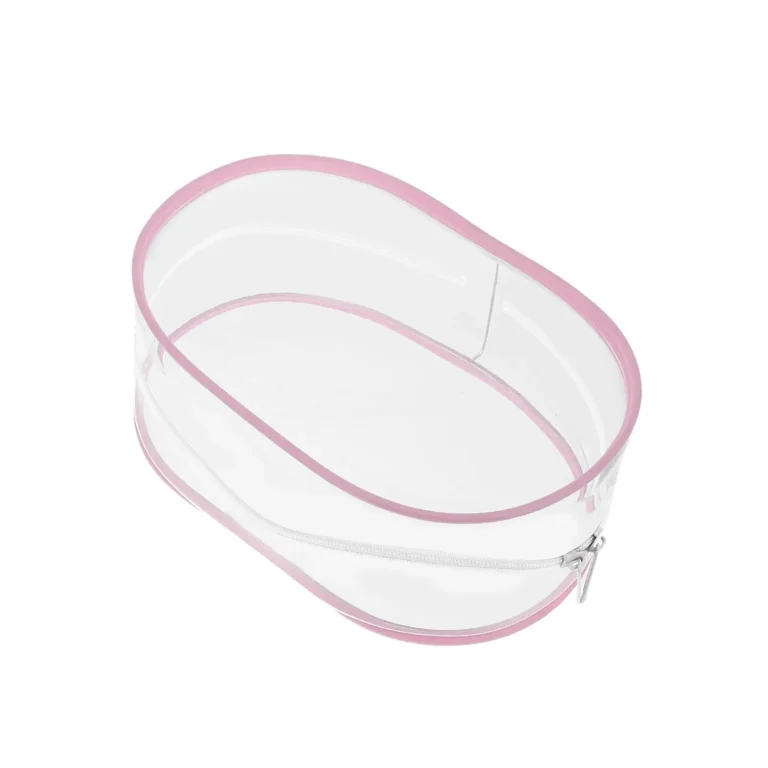
Yes, with compatible ink and surface preparation. Adhesion, opacity, flexibility, migration, and chemical resistance must be tested. Printing on the inside surface can protect the logo from abrasion but may create contact or migration considerations.
Does a metal logo plate always require a mold fee?
A custom shape or relief usually requires tooling. A simple laser-engraved stock plate may avoid a custom mold. Ask whether the fee covers a die, mold, engraving setup, plating sample, or all of these, and whether it can be reused.
What file format should buyers send?
Vector AI, EPS, SVG, or editable PDF is preferred. Fonts should be outlined. Include logo dimensions, placement, colors, and minimum acceptable detail. High-resolution PNG may help visually but should not replace vector artwork for production.
How can a brand match gold foil to gold hardware?
Exact matching is difficult because foil and metal plating reflect light differently. Approve them side by side and aim for coordinated warmth and brightness. Use physical samples rather than digital color values.
Which logo method has the lowest MOQ?
Heat transfer, digital printing, woven labels, and some embroidery programs can support relatively low quantities. Screen printing requires screens but is still economical at moderate volume. Foil dies and metal molds make small orders more sensitive to setup cost.
Expert Recommendation, CTA, and Future Trend
Select cosmetic bag logo methods after the material, bag structure, retail position, and order volume are known. Use printing for efficient, scalable branding; foil for refined metallic detail; embroidery for tactile textile value; and metal plates when dimensional hardware is worth the added tooling and inspection.
Future cosmetic bag branding will include thinner recycled-metal plates, laser-marked hardware, digital embroidery, low-temperature transfers, water-based inks, removable badges, and traceability elements such as discreet QR or NFC components. The strongest programs will keep the logo visually distinctive while reducing unnecessary material complexity.
Send the bag material, logo artwork, dimensions, quantity, target market, preferred finish, and expected price level to Bling Accessory. A logo strike-off and finished pre-production sample can confirm appearance, adhesion, balance, and cost before mass production.