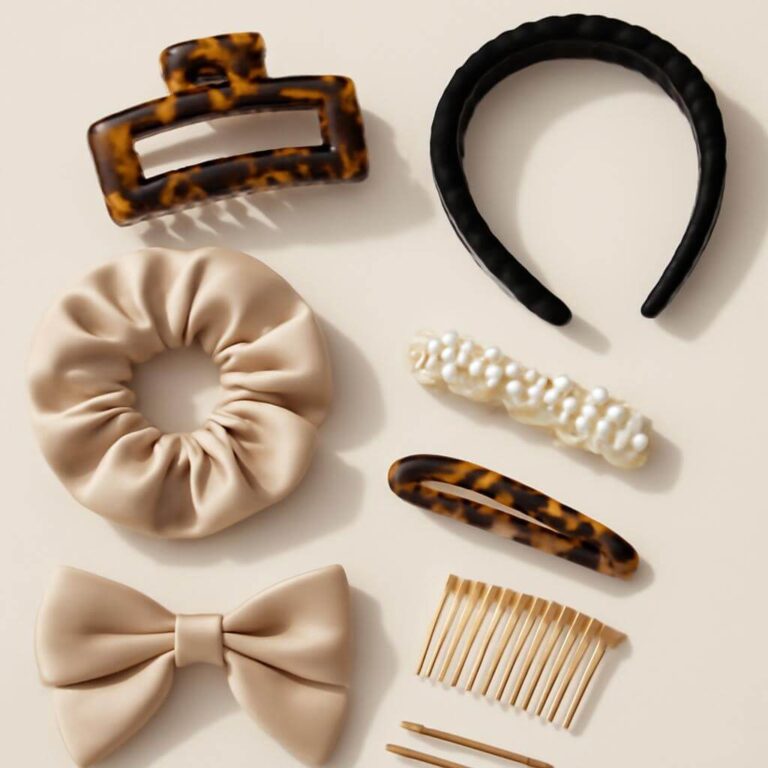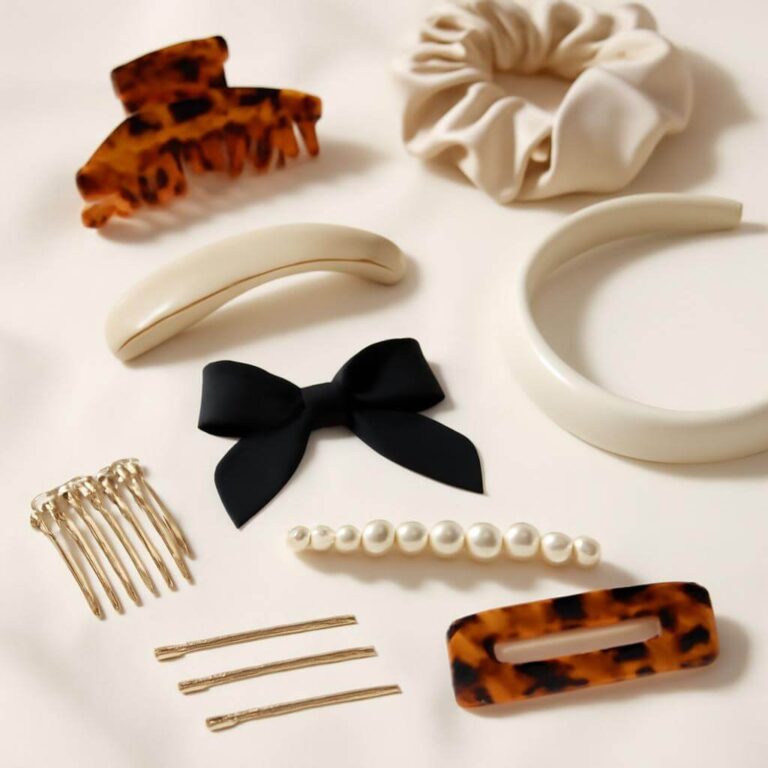
A common sourcing mistake in the hair accessories category is treating French twist items as a niche styling tool instead of a repeat-order basics program. For retailers, salon distributors, fashion accessory brands, and private label importers, the right hair accessory for French twist styling can serve multiple sales angles at once: elegant updos, office-ready hair, bridal edits, gift sets, quick styling collections, and everyday essentials. That makes this product group commercially attractive, but only if buyers evaluate more than appearance. Grip strength, pin balance, surface finishing, size options, color planning, and packaging execution all affect reorder performance. For B2B buyers developing updo-focused collections, French twist accessories are best approached as a structured category that can include U-shaped hair pins, French twist claw clips, combs, barrettes, bobby pins, and decorative accents in coordinated material stories.
Unlike consumer-focused trend articles that emphasize how easy a hairstyle looks, wholesale buyers need to know which formats work across different hair volumes, which materials support durable bulk production, and which packaging styles help merchandise the item clearly in-store or online. This is especially important when building private label hair accessories programs for chain stores, boutiques, ecommerce sellers, beauty distributors, and promotional channels.
Why French Twist Hair Accessories Matter in Wholesale Collections
The French twist has stayed relevant because it fits several commercial use cases without being overly seasonal. It works for formalwear, workwear, occasion styling, bridal programs, salon accessories, and minimalist fashion assortments. From a buyer’s perspective, that broad usage helps reduce trend risk. A single item type can be sold as an elegant styling solution, a practical hair tool, or part of a coordinated accessory set.
There is also a merchandising advantage. Buyers can position French twist accessories in different assortments depending on market level:
- Entry-level lines can focus on plastic or metal bobby pins, simple French twist clips, and basic combs.
- Mid-market programs can introduce resin, acetate, faux pearl, or satin-covered options with improved finishing.
- Giftable or premium collections can include decorative hair combs, rhinestone barrettes, velvet bows, and coordinated display packaging.
Another reason this category matters is usability across hair types. A large U pin or reinforced French twist claw clip may perform well for thick or curly hair, while slim combs, smaller barrettes, and lighter pins are often better suited to fine or short hair. Buyers who understand this can avoid over-concentrating on one silhouette and instead develop size-based assortments that improve sell-through.
For market context, industry observers such as FashionUnited and Statista often highlight the continued relevance of practical fashion accessories and occasion-led styling products. That does not mean every trend should be copied, but it does confirm an important sourcing insight: accessories that combine ease, versatility, and visual polish tend to perform better across retail channels than purely novelty-driven items.
For importers comparing core styles, the most reliable wholesale strategy is to build a French twist capsule around both functional and decorative pieces. A buyer may start with metal U pins and plastic clips as volume items, then add acetate combs, faux pearl pins, or organza hair bows to raise average order value. This category-crossing approach also helps retailers create matching stories with other hair accessories such as claw clips, scrunchies, headbands, and barrettes.
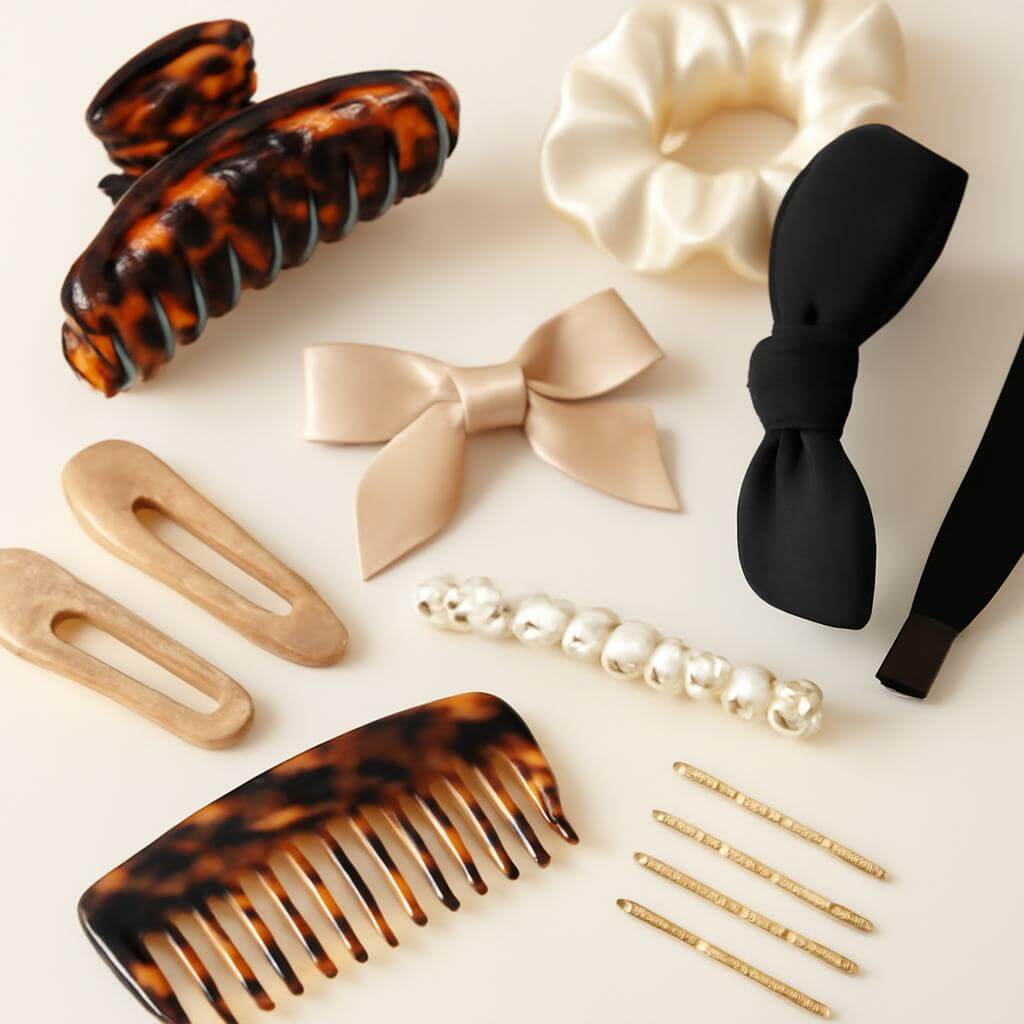
Product Types, Materials, and Design Factors Buyers Should Compare
When buyers search for the best hair accessory for French twist programs, they are usually comparing several product formats rather than one single item. Each has a different performance profile, price structure, and packaging requirement.
U-shaped hair pins are often the most versatile option for updo styling. They are compact, relatively efficient to pack, and easy to merchandise in multi-piece sets. For thicker hair, buyers should check wire gauge, tip finishing, spring resilience, and whether the pin keeps its shape after repeated use. If the tips are too sharp or the plating is inconsistent, complaint rates can rise quickly.
French twist clips and claw clips are better for customers who want a faster hold. These are strong sellers in convenience-driven retail because they reduce styling steps. However, claw clip sourcing requires more attention to hinge strength, spring quality, tooth alignment, mold precision, and breakage risk during transport. For long hair or thick hair programs, larger clip bodies and stronger springs are usually necessary. For short hair edits, slimmer profiles can be more commercially practical.
Hair combs and side combs offer another solution, especially for bridal, occasion, or embellished collections. They can be developed in metal, resin, acetate-look plastic, faux pearl, or rhinestone combinations. Here, the buying challenge is not only appearance but insertion comfort and stability. If comb teeth are too rigid or too smooth, hold performance drops. If plating or stone setting is weak, the item may look premium at sampling stage but fail during bulk shipments.
Decorative support items should also be considered. Bobby pins, small barrettes, satin bows, velvet bows, organza accents, and pearl pin sets can extend a French twist assortment without requiring entirely new retail education. For private label brands, this is a practical way to create coordinated merchandising stories using one hairstyle theme.
Material choice affects both product positioning and technical performance. Common options include:
- Metal: suitable for U pins, bobby pins, comb structures, and minimalist twist tools; important factors include plating consistency, anti-rust treatment, and tip smoothness.
- Plastic: efficient for cost-controlled clips and combs; buyers should confirm mold accuracy, hinge durability, and drop-test tolerance.
- Acetate or resin-look materials: useful for upgraded fashion positioning, tortoise patterns, marble effects, and seasonal color stories.
- Satin, velvet, and organza: ideal for bows, wrapped headbands, or soft embellishment around French twist styling collections.
- Faux pearl and rhinestone: common in occasion and giftable lines, but they require stronger attachment methods and stricter finishing checks.
Several practical sourcing insights matter here. First, color consistency is easier to control in solid plastic than in multi-layer acetate effects, so reorder planning should account for that. Second, decorative elements can increase perceived value but also increase defect points. Third, grip performance should be tested on multiple hair textures before approving samples. Fourth, premium appearance on a display card does not always mean strong structural durability in transit. Fifth, mixed-material products often require more lead time because components may come from separate production stages.
Buyers developing custom programs should also think beyond single-SKU selling. A French twist item can be grouped with matching scrunchies, headbands, or claw clips to create coordinated sets for retail display, subscription boxes, or salon resale. This kind of assortment planning often improves shelf impact more than launching one isolated hero piece.
Customization, Packaging, and Private Label Development
For wholesale buyers, the real value of a French twist accessory line often comes from how well it can be customized for brand identity and retail presentation. Private label hair accessories are rarely just about adding a logo. The stronger approach is aligning product design, color selection, finish, and packaging with the target channel.
Custom color development is usually one of the first decisions. For basic metal pins or plastic clips, buyers may choose black, tortoise, champagne, ivory, brown, or seasonal fashion colors. For elevated programs, resin effects, translucent tones, faux pearl palettes, and mixed-material combinations can help differentiate the collection. It is important to request physical color references or Pantone-based alignment where possible, especially when several SKUs will be displayed together.
Branding options can include logo plates on clips, printed display cards, barcode labels, woven labels for textile components, hang tags, and custom inserts. The correct choice depends on the item. A U pin set may work best in a clean card-and-OPP bag format, while a bridal comb or decorative barrette may justify a gift box. Retail hanging cards are often useful for chain store environments, while boxed sets suit boutiques, gifting programs, or online premium bundles.
Packaging should be evaluated as a sales tool, not just a protection layer. B2B buyers usually compare these options:
- Display card for high-visibility merchandising and lower packaging cost.
- OPP bag for compact shipping and basic ecommerce fulfillment.
- Retail hanging card with barcode label for organized shelf presentation.
- Gift box for elevated presentation, set programs, or seasonal promotions.
- Display set packaging for coordinated multi-piece collections.
Sampling is another critical stage. Before approving bulk production, buyers should review not only the accessory itself but also card thickness, print clarity, hole position for hanging, adhesive performance, insert fit, and drop-test suitability. In hair accessories, packaging mistakes can weaken perceived quality even when the product is acceptable.
A supplier such as Q&N Fashion Accessory can support buyers who want to combine product customization with practical packaging execution. For example, a private label program might include matte metal U pins on branded cards, acetate-look French twist clips in two core colors, and a matching faux pearl barrette in a giftable presentation. That kind of small collection is often more effective than ordering unrelated pieces from multiple factories.
Buyers can review broader category planning and sourcing direction through https://blaccessory.com/ and explore category-related options at https://blaccessory.com/hair-accessories/. For brands building seasonal launches, this helps connect French twist products with other commercial hair accessory groups rather than treating them as one-off items.
How Buyers Should Evaluate Hair Accessory Suppliers for French Twist Programs
Selecting a supplier for French twist accessories requires more than reviewing sample photos. Buyers should assess whether the supplier can manage both functional consistency and merchandising details across repeat orders. In this category, minor defects become visible quickly: uneven plating, weak springs, loose rhinestones, rough comb teeth, inconsistent faux pearl color, and packaging misalignment all affect retail performance.
MOQ is one of the first commercial filters. Basic pins, clips, and combs may support more accessible MOQs, but custom molds, special colors, decorative stone settings, or premium gift packaging can raise minimums. Buyers should ask whether MOQ applies per color, per style, per material finish, or per full assortment. This is especially important when developing capsule collections for multiple retail channels.
Sample approval should be structured in stages. A practical process may include pre-development discussion, prototype review, color confirmation, packaging mockup approval, and final pre-production sample signoff. Skipping any of these steps increases bulk-order risk. If the item is a French twist claw clip, buyers should request tests for hinge tension and tooth alignment. If the item is a U pin set, buyers should check wire thickness, tip smoothness, and pack count accuracy.
Lead time should also be discussed honestly. Buyers often underestimate how long it takes to combine custom packaging, decorative attachments, and multi-SKU assortment packing. A simple metal pin program may move faster than a mixed set that includes organza bows, pearl accents, and printed gift boxes. Lead time planning should cover sampling, bulk production, packing, and final inspection, not just factory output.
Quality control is where experienced buyers gain an advantage. Useful QC checkpoints include:
- Grip strength and holding performance across different hair densities
- Surface finishing quality, including plating, polishing, and edge smoothness
- Color consistency across the same order and across repeat orders
- Attachment security for pearls, stones, bows, or logo plates
- Packaging accuracy, barcode placement, and display card appearance
Communication quality matters as much as manufacturing capability. Buyers should confirm whether the supplier provides clear specification sheets, sample feedback handling, packaging approval records, and reorder references. This becomes especially valuable once a style starts scaling. Reorder stability is a major B2B decision factor because a product that sells well in one season often needs replenishment in the next without major variation.
When comparing wholesale accessory suppliers, buyers should look at category breadth as well. A factory or sourcing partner that understands French twist items alongside claw clips, scrunchies, bows, barrettes, and combs can usually support more coherent range development. Q&N Fashion Accessory is relevant in this context because many overseas buyers prefer suppliers that can support coordinated accessory programs rather than isolated SKUs.
Strategic Recommendations for Building a Strong French Twist Accessory Line
For most B2B buyers, the best approach is not to source only one “perfect” French twist item. It is to build a balanced program with clear good-better-best positioning. A basic tier can include metal bobby pins and simple twist clips. A mid-tier can introduce resin or acetate-look claw clips and combs. A premium tier can use faux pearl, rhinestone, satin, or velvet details for occasion and gifting markets.
Buyers should also segment by hair type and styling need. Thick-hair users often need larger clips, stronger springs, and wider U pins. Fine-hair users may prefer slimmer combs, lighter pins, and smaller barrettes. If the assortment does not reflect these differences, return risk increases and online conversion may weaken because product descriptions feel too generic.
Another recommendation is to merchandise by styling solution, not only by item type. A French twist collection can include easy updo pins, hidden-hold combs, decorative finishing barrettes, and matching scrunchies or headbands. This supports both ecommerce storytelling and retail display planning.
Packaging should match channel economics. Low-cost OPP or display-card programs may be enough for mass retail and online replenishment. Gift boxes and coordinated display sets are better for boutiques, bridal edits, holiday collections, or promotional campaigns. Buyers should not overpackage a value product, but they should not underpackage a premium-looking item either.
Finally, keep reorders in mind from the first sample stage. Document material specs, plating standards, dimensions, card artwork, and approved colors. A sourcing partner like Q&N Fashion Accessory can be more useful when the relationship is managed around specification discipline, seasonal planning, and packaging consistency rather than one-time price comparison. For buyers developing private label hair accessories with long-term retail goals, that disciplined approach usually leads to fewer quality surprises and stronger sell-through across repeat programs.
Frequently Asked Questions
What clip do you use for a French twist?
For wholesale programs, the answer depends on the target consumer and hair type. Common options include French twist claw clips, U-shaped hair pins, side combs, and supportive barrettes. A French twist claw clip is often the easiest item for everyday retail because it offers faster styling and broad consumer appeal. U pins are better for minimalist, salon, or professional styling ranges. Buyers should evaluate clip size, spring strength, tooth alignment, and whether the item is intended for fine, medium, or thick hair.
How do I put my hair in a French twist from a product development perspective?
B2B buyers do not need to provide consumer tutorials in detail, but they should understand the styling mechanics because product design depends on them. A French twist is created by gathering the hair, twisting it upward, and securing it with a pin, comb, or clip. That means the accessory must provide both vertical hold and lateral stability. When sourcing, buyers should ask whether the item was tested for tension, insertion angle, and hold on different hair textures. Those practical details affect customer satisfaction more than decorative appearance alone.
How do you hide the clip in a French twist?
Consumers usually hide the clip by placing it under the rolled section of hair, so for B2B product planning this creates demand for slim-profile clips, neutral colors, and elegant finishing. Matte black, brown, tortoise, and soft metallic tones are often easier to conceal than bulky, high-contrast parts. Buyers developing private label collections can also offer two paths: hidden functional clips for daily styling and visible decorative clips for fashion-led collections.
How do you hold up a French twist for thick hair?
For thick hair, buyers should prioritize stronger construction. This usually means larger claw clips with reinforced springs, wider U pins in thicker metal gauge, or combs with enough tooth depth to anchor securely. Thick-hair programs should also be tested for grip strength and long-wear comfort. One common sourcing error is approving a stylish sample that photographs well but lacks enough structural strength for heavier hair volume. Bulk orders should be validated with wear tests before final confirmation.
What customization options are best for private label French twist accessories?
The most practical options are custom colors, logo plates where structurally suitable, printed display cards, retail hanging cards, barcode labels, OPP bags, gift boxes, and coordinated set packaging. Textile-related accessories can also use woven labels or hang tags. Buyers should choose customization based on the sales channel. A chain retailer may need barcode-ready hanging cards, while a boutique brand may prefer a premium gift box and a more fashion-driven material story using acetate, satin, velvet, faux pearl, or rhinestone details.
How can I evaluate a supplier for bulk French twist hair accessories?
Start with sample quality, MOQ structure, packaging capability, and reorder control. Then review grip strength, finishing quality, color consistency, and communication during revisions. Ask how defects are checked in bulk production and whether the supplier can support coordinated programs across clips, combs, barrettes, scrunchies, and related items. Buyers looking to build a broader category can review https://blaccessory.com/ for sourcing direction and explore category options through the hair accessories page. A supplier that can align styling function with private label packaging is usually a stronger long-term partner than one offering only low unit price.