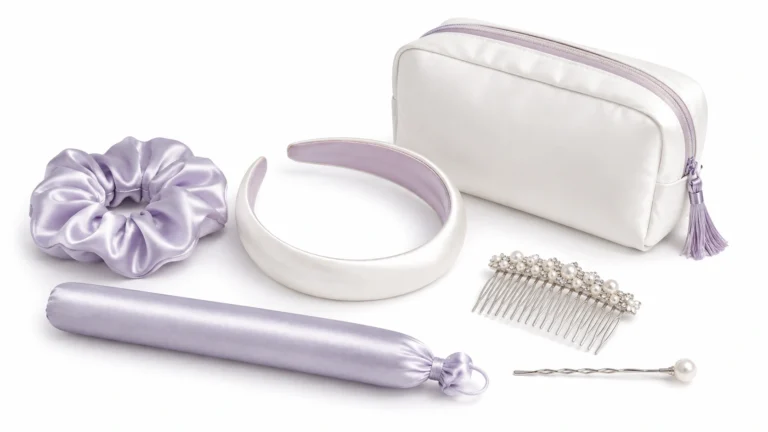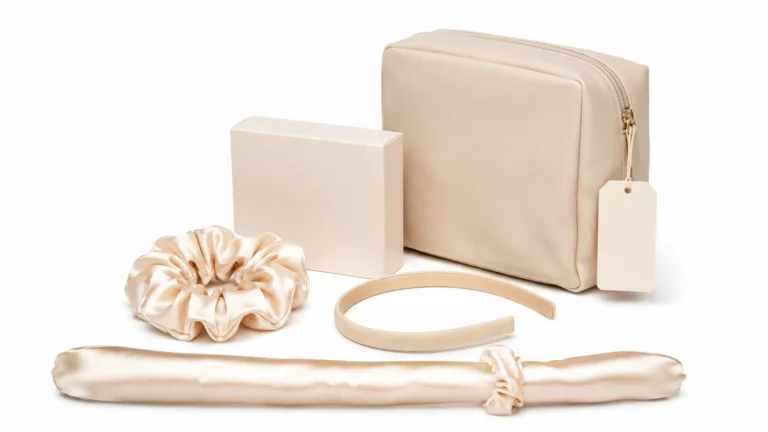
A buyer developing a hair accessory collection for boutiques, salon channels, gift retailers, or private label beauty brands often faces the same problem: a French twist looks simple in trend imagery, but the wrong product construction quickly leads to weak hold, scalp discomfort, inconsistent plating, or poor retail presentation. For B2B sourcing teams, the real question is not just which hair accessory for French twist styling looks elegant in photos. It is which item will perform across different hair types, fit the target price range, support branding needs, and maintain reorder consistency in bulk production.
The French twist has returned as an easy updo category with broad appeal because it connects fashion styling with practical everyday use. Trend coverage from fashion media such as FashionUnited and wider retail tracking on Statista show that accessories with both style and function tend to gain recurring interest across fashion and beauty segments. For overseas buyers, that makes French twist tools and updo accessories a useful line extension within hair accessories, especially when the assortment includes French hair pins, U-shaped pins, barrettes, claw clips, combs, and decorative accents designed for easy updo use.
Unlike consumer-style articles that present these hair pins as the secret to a perfect French updo, wholesale buyers need deeper answers on material options, sizing, grip strength, packaging, MOQ, sample approval, and OEM or ODM execution. This article focuses on those sourcing decisions and explains how to build a commercially viable French twist accessory program for modern retail channels.
Why French Twist Accessories Matter in Wholesale Hair Accessory Collections
The French twist sits at an intersection of classic styling and modern convenience. It feels polished enough for eventwear and office dressing, yet relaxed enough for easy tutorial-led social content and everyday beauty merchandising. That versatility matters to B2B buyers because products that serve multiple use occasions usually have better merchandising flexibility and can be sold across boutiques, department store concession programs, e-commerce brands, salon retail counters, and curated gift assortments.
For sourcing teams, the category is broader than one item. A successful French twist program may include:
- French hair pins or U-shaped hair pins for minimalist updo styling
- French twist comb designs for added hold and structure
- French twist claw clips for fast styling, especially for long hair
- Bobby pins and hidden support pins for securing the finished shape
- Decorative barrettes, faux pearl pins, or rhinestone accents for dressier collections
One important B2B insight is that French twist accessories often sell better when positioned as a small curated system rather than a single SKU. For example, a buyer may combine one visible decorative piece with one hidden support item in a two-piece set. This improves perceived value, supports higher ticket retail packaging, and reduces customer complaints about hold performance.
A second sourcing insight is that hair type compatibility should be part of assortment planning from the start. Fine hair, thick hair, curly hair, and layered short hair do not perform equally with the same pin gauge, comb spacing, or claw clip spring tension. Buyers who request only one universal sample often end up with mediocre results across all user groups. It is better to develop at least two construction options: one for light-to-medium hold and one for thicker or textured hair.
A third market insight is that the French twist trend supports both understated and decorative aesthetics. Matte black metal pins, polished gold-tone French pins, tortoise acetate combs, faux pearl barrettes, and resin claw clips can all fit the same styling story while targeting different price points. This makes the category useful for buyers building tiered collections.
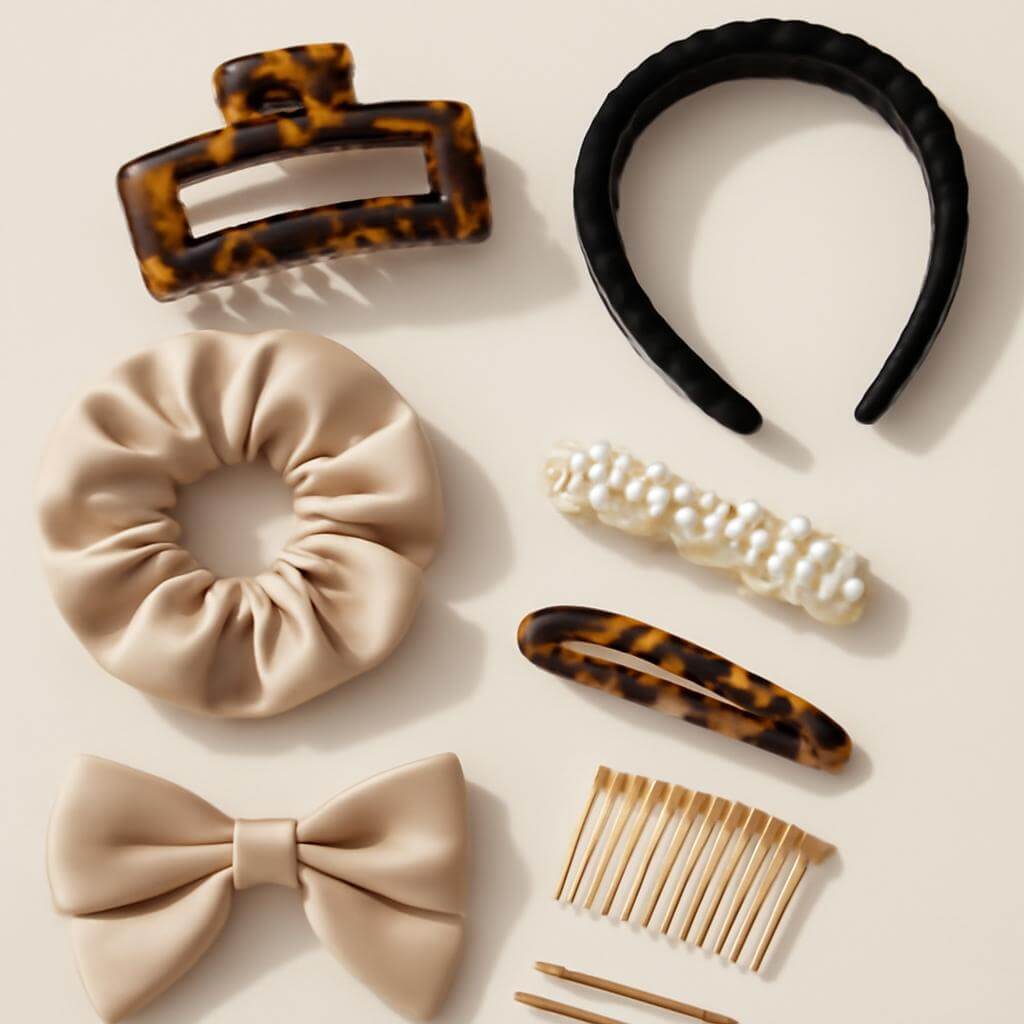
Materials, Structures, and Product Types Buyers Should Compare
When buyers search for the best hair accessory for French twist styling, the answer depends on hold mechanics, target market, and packaging concept. In wholesale development, the item has to work not only for an easy tutorial demonstration but also in repeated use and retail handling.
Metal remains one of the most practical choices for French hair pins and bobby pins because it offers strength and a slim profile. However, metal specification matters. Thickness, spring resilience, plating adhesion, edge finishing, and tip smoothness all affect real performance. If the wire is too thin, the pin bends easily. If it is too thick, it becomes difficult to insert and may not suit finer hair. Buyers should also review whether the pin ends are rounded or polished enough to avoid scratching the scalp.
Acetate and resin are strong options for visible statement pieces such as French twist combs, decorative side combs, and premium claw clips. These materials support tortoise patterns, marble effects, translucent colors, and higher-end visual appeal. Their commercial advantage is design differentiation. Their sourcing challenge is consistency. Pattern repeat, sheet variation, and color matching can differ between sample and bulk orders, so approval should include both physical standards and photo-confirmed color references.
Plastic is often used for value-tier claws, combs, and internal support structures. It can be cost-efficient and suitable for large-volume programs, but buyers need to check mold accuracy, hinge stability, and whether tooth tips are smooth and evenly formed. For French twist claw clip long hair programs, tooth alignment and spring quality are especially important because weak closure leads to return risk.
Textile-based materials such as satin, velvet, and organza are less common as the core holding tool for a twist, but they are highly useful in fashion-led accessory collections. A buyer may pair a hidden inner comb or clip with an outer satin bow, velvet wrap, or organza trim to create a more giftable item. These mixed-material products work well for holiday capsules, bridal channels, and boutique private label lines.
Decorative materials like faux pearl and rhinestone can elevate average unit price, but they also raise quality-control requirements. Pearls should be securely attached and evenly spaced. Rhinestones should be checked for glue overflow, setting firmness, and resistance to shedding during transit. When sourcing a dressy French twist accessory, appearance quality has to match holding performance.
From a structure perspective, buyers typically compare these options:
- U-shaped hair pins: best for minimalist styling and editorial-inspired easy updo collections
- French twist comb: useful for stronger hold and classic updo positioning
- Claw clip: ideal for fast application and broad market appeal
- Barrette with hidden comb or teeth: suitable for decorative retail collections
- Bobby pin support sets: low-cost add-on items that improve functionality
A fourth B2B sourcing insight is that dimensions should be standardized early. Length, width, pin gauge, comb tooth spacing, and curvature should all be documented in a technical sheet. If a buyer only approves appearance and not structural measurements, reorder consistency becomes harder to manage.
A fifth practical insight is that “easy” and “perfect” are not just marketing words. In this category, they translate into measurable product attributes: insertion angle, grip stability, anti-slip detail, spring resistance, and whether the accessory can create a secure French updo without requiring excessive force. Those are the points that reduce complaints after launch.
Customization, Branding, and Retail Packaging for Private Label Programs
For buyers developing private label hair accessories, French twist items offer strong customization potential because they can be sold as basic tools, fashion accessories, or gift-oriented sets. A supplier should be able to support multiple customization levels depending on the program budget and timeline.
Color is usually the first layer of customization. Common commercial options include matte black, gold, silver, rose gold, tortoise, pearl white, champagne, and seasonal trend shades. In acetate, resin, or coated metal programs, custom color development should be discussed carefully because MOQ, mold cost, and color consistency differ by material. A buyer running a core program may prefer stable carryover colors, while a fashion retailer may request seasonal drops tied to trend calendars.
Logo customization can be handled through logo plates, engraved metal tags, printed display cards, woven labels for textile trims, or barcode labels for retail operations. For a slim metal French hair pin, direct logo placement may be limited, so branded card packaging often delivers better visual impact. On larger claw clips, comb bases, or decorative barrettes, a small logo plate or molded logo may be possible depending on tooling and aesthetics.
Packaging affects both perceived value and supply chain efficiency. The most common wholesale solutions include display card, retail hanging card, OPP bag, gift box, and coordinated display set for multi-SKU assortments. A single U-pin in an OPP bag may fit a value program. A two-piece pearl pin set on a printed card works well for boutique retail. A premium French twist collection may use a gift box with barcode label and insert card explaining an easy tutorial or styling method.
Buyers should also think about packaging from a replenishment perspective. If the program is sold in chain stores, peg-ready hanging cards with clear SKU coding simplify store handling. If the line is positioned for gifting, visual consistency across the outer box, inner tray, and color assortment becomes more important. For e-commerce brands, transit protection matters because bent pins, detached pearls, or scratched acetate surfaces can create avoidable returns.
A supplier such as Q&N Fashion Accessory can support OEM and ODM directions depending on whether the buyer has finished artwork, target sizing, and packaging specifications or needs assistance translating a concept into a production-ready accessory line. In either case, sample review should cover not only the accessory itself but also display card thickness, print quality, barcode readability, and carton packing method.
Useful branding and packaging options in this category often include:
- Custom color matching for metal, acetate, resin, plastic, satin, or velvet finishes
- Retail display cards with logo, item name, barcode label, and country-specific compliance text
- Multi-piece set packaging for French hair pins, bobby pins, or decorative comb combinations
- Gift box presentation for premium faux pearl or rhinestone updo accessories
- Hang tags or insert cards featuring a simple French twist tutorial for merchandising support
A sixth sourcing insight is that packaging approval should happen at the same time as bulk sample approval, not after production starts. Packaging delays often create shipment bottlenecks even when the accessory itself is ready.
How Buyers Should Evaluate Suppliers for French Twist Hair Accessories
Supplier evaluation in this category should go beyond catalog breadth. Many factories can show attractive images of hair clips, combs, and pins, but not all can deliver stable hold, smooth finishing, and repeatable packaging quality across bulk orders. For French twist products, physical performance is closely tied to small technical details.
First, ask about MOQ by material and by design type. A standard metal pin may have a lower MOQ than a custom acetate comb or a new molded claw clip. If a project involves unique shape tooling, buyers should confirm mold cost, ownership terms, sample timeline, and whether mold revisions are included.
Second, request samples that represent actual production conditions. For example, if the program includes gold-tone plating, faux pearl decoration, and a hanging display card, the sample should include all three elements. Reviewing only an unfinished base component can hide later issues in assembly quality or final presentation.
Third, evaluate grip strength with realistic use cases. For a French twist clip tutorial program aimed at long hair, the clip should be tested on heavier hair volumes. For fine-hair collections, the accessory should not feel too stiff or oversized. A balanced supplier will discuss use-case matching rather than claiming that one design works for all hair textures.
Fourth, inspect finishing quality closely. Buyers should check metal edges, coating smoothness, comb tooth tips, hinge closure, pearl attachment, rhinestone placement, and color matching. In this category, minor defects are highly visible because the accessories are worn close to the face and often sold in open retail formats.
Fifth, ask how quality control is managed during production. Practical QC points may include incoming material checks, plating or color comparison against approved standards, spring or opening-closing tests for clips, pull testing for attached decorations, and pre-shipment inspection by assortment and packaging count. Bulk consistency matters more than one good pre-production sample.
Lead time should also be reviewed carefully. Buyers often underestimate how different process steps affect timing. Metal forming, plating, stone setting, card printing, and final packaging may be handled in different stages. A simple pin may move quickly, while a mixed-material gift set needs more coordination. Reorder planning should factor in buffer time for peak seasons and packaging replenishment.
When comparing wholesale accessory suppliers, it is also worth reviewing communication quality. Are revisions documented clearly? Are Pantone or physical color references required? Are approval points for packaging, logo position, and carton marks listed in writing? Good communication reduces mismatch more effectively than broad marketing claims.
Strategic Recommendations for Building a Strong French Twist Accessory Line
Buyers entering this segment should avoid treating the French twist as a one-item trend. A stronger strategy is to build a small family of related products that address different consumer needs and price tiers. One core metal French hair pin, one decorative faux pearl version, one claw clip alternative, and one support-pin set can create a more complete merchandising story without excessive SKU sprawl.
It also helps to segment by hair type rather than style name alone. A product labeled only as a French twist accessory may look attractive online, but the sell-through improves when buyers define whether it is intended for thick hair, fine hair, long hair, or quick easy updo use. That segmentation should influence size, curvature, tooth spacing, and packaging copy.
For private label programs, start with two or three proven colors and one reliable packaging format before expanding into seasonal variants. This reduces approval complexity and makes reorder management easier. Once grip performance, finishing quality, and retail presentation are stable, additional trend colors or decorative materials can be introduced with less risk.
Another practical recommendation is to combine visible style with hidden support. A beautiful outer accessory may attract attention, but hidden bobby pins or an inner comb often determine whether the French twist holds well. Bundled sets can solve that issue while creating a stronger retail proposition.
For buyers looking for a sourcing partner with experience in wholesale hair accessories, Q&N Fashion Accessory can be part of the evaluation process when comparing material options, private label packaging, and production requirements for French hair pins, clips, combs, and related updo accessories. Buyers can also review the broader product direction at https://blaccessory.com/ to align style concepts with packaging and MOQ planning. In practice, the most successful programs are those where design, hold performance, packaging, and reorder stability are developed together from the first sample stage.
Frequently Asked Questions
What clip do you use for a French twist?
For wholesale programs, the best clip depends on the target customer and hair type. A French twist claw clip works well for fast, everyday styling and broad retail appeal. A French twist comb offers more structured hold for classic updos. U-shaped hair pins or French hair pins are better for minimalist and fashion-led collections. B2B buyers should choose based on hold strength, visible design, and whether the product is intended for fine, thick, or long hair.
How to put your hair in a French twist when developing tutorial-based retail packaging?
From a product development perspective, buyers often add a simple instruction card or back-card illustration. The usual method is to gather the hair, twist it upward, fold the ends inward, and secure the shape with a pin, comb, or clip. For packaging design, it is useful to keep instructions short and visual. This improves consumer understanding and can reduce returns caused by misuse, especially for first-time buyers of French twist tools.
How do you get a French twist to hold across different hair types?
Hold depends on the accessory structure more than on appearance alone. Buyers should evaluate pin length, comb tooth spacing, clip spring tension, inner grip detail, and surface finishing. Thick or curly hair may need a larger pin gauge or stronger claw spring, while fine hair often benefits from a slimmer profile and anti-slip design. Many brands improve performance by selling decorative pieces together with hidden bobby pins or support combs.
How do you hide the clip in a French twist without losing functionality?
Hidden-clip designs usually use slim internal combs, narrow claws, or support pins placed beneath the outer layer of twisted hair. For B2B buyers, this means the accessory should be developed with a balance between visual discretion and secure hold. Decorative covers, faux pearl top elements, or acetate outer shells can help conceal the functional base. Samples should be tested in real styling use, not only checked for appearance on the table.
What materials are best for custom French hair pins and updo accessories?
Metal is often best for structural hold in French hair pins and bobby pins. Acetate and resin are popular for premium visible pieces such as combs and decorative clips. Plastic is suitable for value-oriented claw clips and molded styles. Satin, velvet, and organza can be used as fashion coverings or trim details, while faux pearl and rhinestone add higher perceived value. The right choice depends on target price, channel, branding, and required durability.
What should buyers ask before placing a bulk order for French twist hair accessories?
Key questions include MOQ by design and material, sample lead time, mold cost if applicable, color consistency standards, plating or decoration durability, packaging options, and QC checkpoints for finishing and grip strength. Buyers should also confirm whether the supplier can support display card packaging, logo application, barcode labels, and stable repeat orders. For broader sourcing reference, buyers can review Q&N Fashion Accessory and compare product direction with their private label requirements.