Q&N Fashion Accessory - Professional Customized
Cosmetic Bag & Hair Accessory Manufacturer
Enter product name or category keywords to search.
Blog
Screen Printing Cosmetic Bags Guide
Screen Printing Cosmetic Bags is one of the most common logo customization methods for beauty brands that need clear, cost-effective, and scalable branding on cosmetic pouches, toiletry bags, travel makeup bags, clear cosmetic bags, drawstring pouches, and mini makeup bags. When the logo is simple, the material is suitable, and the production details are confirmed correctly, screen printing can create a clean branded effect at a practical cost.
For many beauty brands, the cosmetic bag is more than a storage item. It may be used for skincare gift sets, makeup collections, PR packages, travel kits, gift-with-purchase campaigns, retail promotions, and seasonal beauty launches. A printed logo helps connect the pouch with the brand story and makes the bag feel like part of a complete product experience.
However, screen printing is not the right choice for every cosmetic bag. The final result depends on artwork quality, ink color, fabric surface, material coating, print position, drying process, and sample testing. A logo that looks perfect on a digital mockup may look different on nylon, canvas, PVC, TPU, or textured fabric. That is why beauty brands should understand the process before confirming bulk production.
Industry demand supports better beauty packaging decisions. Statista projects the worldwide Beauty & Personal Care market to generate US$698.38 billion in revenue in 2026. Grand View Research reports that the global cosmetic packaging market reached US$34.22 billion in 2024 and is expected to reach US$44.28 billion by 2030. As brands compete through packaging, gifting, and visual identity, logo execution on custom cosmetic bags becomes a key detail.
Screen printing is a logo printing method that uses a mesh screen, stencil, ink, and pressure to transfer a design onto a surface. For cosmetic bags, the logo or artwork is printed directly onto fabric, PVC, TPU, canvas, cotton, polyester, nylon, or other suitable material surfaces.
The process is widely used for simple brand names, one-color logos, promotional marks, slogans, icons, and clean graphic designs. It is especially suitable when the artwork has solid colors and clear lines. For cosmetic bag production, screen printing is often chosen because it offers strong logo visibility without adding heavy hardware or complicated decoration.
Common Uses for Beauty Brands
Beauty brands use screen printing on cosmetic bags for makeup pouches, skincare travel bags, clear cosmetic pouches, mini makeup bags, toiletry bags, drawstring beauty pouches, PR package bags, gift-with-purchase pouches, and retail beauty gift sets.
The printed logo can appear on the front center, lower corner, back panel, side panel, transparent front, fabric label area, or packaging card. For high-volume promotional projects, screen printing is often more practical than embroidery, metal plates, or custom molded patches.
Difference Between Screen Printing and Other Logo Methods
Screen printing creates a flat printed logo effect. It is different from embroidery, which uses thread; woven labels, which are sewn onto the bag; metal logo plates, which add hardware; rubber patches, which add raised decoration; and debossing, which presses the logo into PU leather.
The main advantage of screen printing is cost-effective visibility. The main limitation is that it works best with simple artwork and suitable material surfaces. If the logo is very detailed, multi-color, textured, metallic, or luxury-focused, another logo method may create a better final effect.
Beauty brands choose Screen Printing Cosmetic Bags because the method is practical, visible, and suitable for many custom pouch projects. It is especially useful when the order quantity is large, the logo is simple, and the brand needs a clear printed identity on the bag surface.
Cost-Effective Logo Solution
Screen printing is often more cost-effective than embroidery, metal logo plates, rubber patches, or custom hardware. This makes it suitable for beauty brands that need large quantities of cosmetic bags for promotions, product launches, retail campaigns, or gift-with-purchase programs.
The cost depends on logo size, number of colors, material type, print area, and order quantity. One-color printing is usually more economical than multi-color printing because each color may require additional setup and alignment.
Clear Logo Visibility
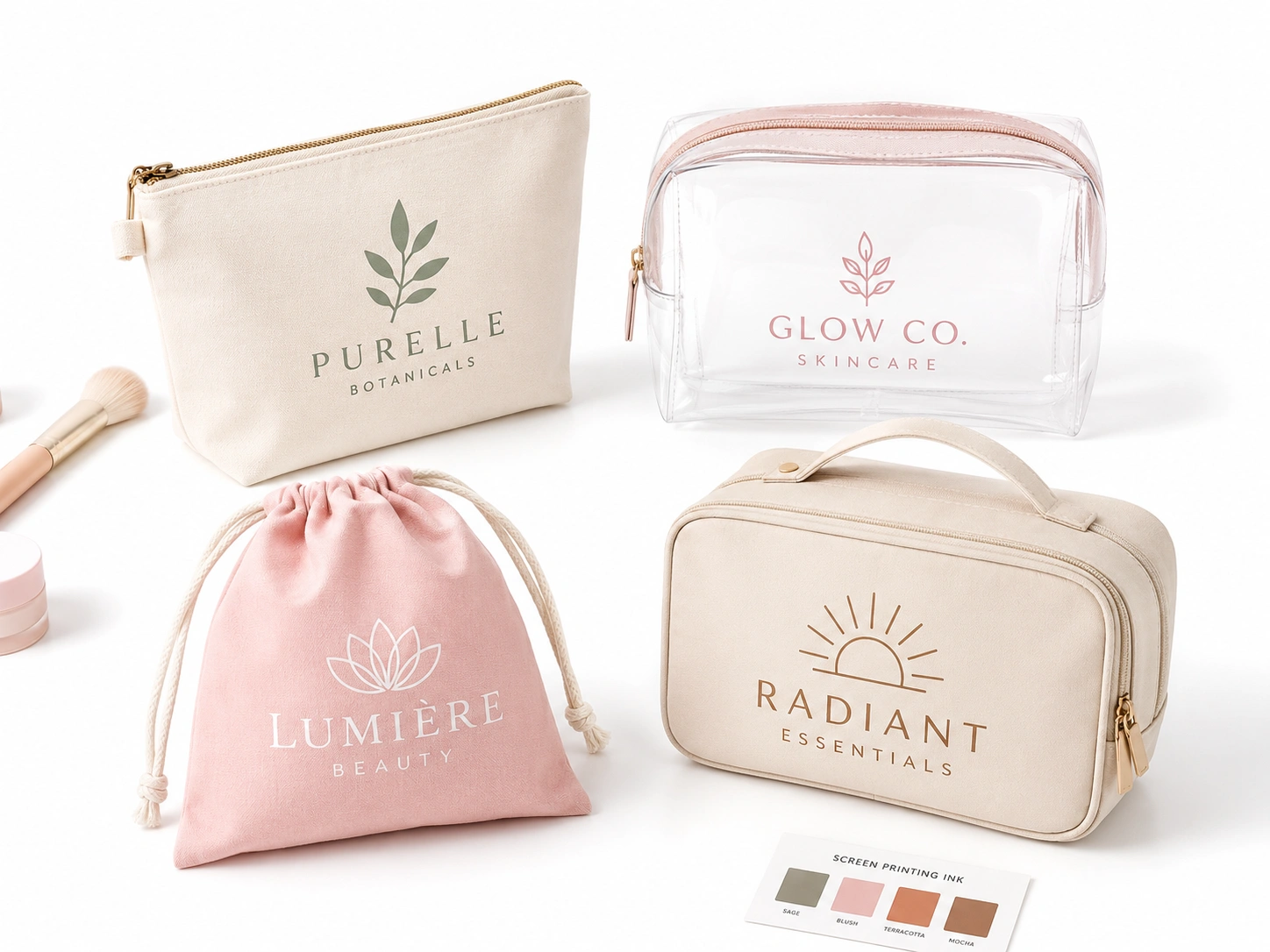
Screen printing can create strong logo visibility when the artwork is clean and the color contrast is good. A white logo on a black pouch, a black logo on a cream pouch, or a soft pink logo on a clear TPU pouch can be simple but effective.
For beauty packaging, visibility should be balanced. A printed logo should be easy to read, but it should not overpower the bag or make it look like low-value promotional packaging.
Suitable for Bulk Orders
Screen printing works well for bulk production because the process can be repeated efficiently after setup. This is useful for retail chains, beauty subscription boxes, event gifts, PR campaigns, and brand promotions that need hundreds or thousands of consistent cosmetic bags.
For repeat orders, the same logo artwork and print position can often be used again, which helps maintain brand consistency across different campaigns.
Good for Simple Brand Artwork
Screen printing is ideal for simple brand artwork: wordmarks, clean icons, short slogans, simple line graphics, and solid color logos. Many beauty brands use minimal logos, so screen printing can match their packaging style well.
For complex gradients, tiny letters, photo-like artwork, or many color layers, heat transfer or another method may work better.
Reason to Choose Screen Printing
Brand Benefit
Best Project Type
Cost-effective setup
Controls branding cost
Bulk cosmetic bag orders
Clear printed logo
Improves brand recognition
GWP and retail gift sets
Repeatable process
Supports consistent production
Large promotional campaigns
Works for simple artwork
Keeps design clean
Minimal beauty branding
Flexible placement
Can fit many bag styles
Pouches, toiletry bags, clear bags
Best Materials for Screen Printing Cosmetic Bags
Material is one of the most important factors in screen printing. The same logo may look sharp on smooth polyester but less clear on rough canvas. It may print well on PVC but require testing on TPU. Before confirming Screen Printing Cosmetic Bags, beauty brands should evaluate the material surface, coating, color, texture, and ink compatibility.
Polyester
Polyester is one of the most common materials for screen printed cosmetic bags. It is cost-effective, flexible, and suitable for promotional pouches, mini makeup bags, travel cosmetic bags, and gift-with-purchase projects.
Screen printing on polyester usually works best when the surface is smooth and the logo has good color contrast. If the fabric is coated, textured, or very dark, ink testing is recommended before bulk production.
Nylon
Nylon is often used for travel cosmetic bags, toiletry bags, skincare pouches, and higher-quality beauty kits. It usually feels smoother and more durable than basic polyester. Screen printing can work well on nylon, but the ink must be suitable for the surface finish.
For water-resistant nylon or coated nylon, adhesion testing is important. The coating may affect how the ink bonds to the material.
Canvas
Canvas gives a natural and sturdy look. It is popular for clean beauty brands, wellness pouches, organic skincare gifts, and lifestyle cosmetic bags. Screen printing on canvas can create a clean, casual, and brand-friendly result.
Because canvas has texture, very thin logo lines or small text may not print as sharply as they would on a smoother surface. Larger simple logos usually work better.
Cotton
Cotton pouches are suitable for natural beauty, fragrance samples, skincare sachets, and soft promotional gifts. Screen printing on cotton can look clean and friendly, especially for simple one-color logos or natural brand graphics.
If the cotton fabric is soft or loosely woven, sample testing is important to confirm print edge clarity and ink absorption.
PVC and TPU
PVC and TPU are used for clear cosmetic bags and transparent travel pouches. Screen printing can create a clear logo on these materials, but ink compatibility and adhesion must be tested carefully.
For clear bags, logo placement is especially important. The printed logo should remain visible after products are packed inside the pouch. A logo that looks perfect on an empty clear bag may become hard to read when product labels sit behind it.
Material
Screen Printing Suitability
Best Use
Key Check
Polyester
Good
Promotional cosmetic pouches
Surface smoothness and color contrast
Nylon
Good with testing
Travel and skincare bags
Ink adhesion on coating
Canvas
Good for simple logos
Clean beauty and lifestyle bags
Fabric texture and line clarity
Cotton
Good with simple artwork
Natural beauty pouches
Ink absorption and edge clarity
PVC/TPU
Good with ink testing
Clear cosmetic bags
Adhesion, transparency, product display
Best Cosmetic Bag Types for Screen Printing
Screen printing can be used on many cosmetic bag types, but the best results usually come from bags with a relatively flat, stable, and smooth print area. The more curved, textured, padded, or irregular the surface is, the more testing is needed.
Zipper Cosmetic Pouch
Zipper cosmetic pouches are one of the best options for screen printing. They usually have a flat front panel, making logo placement easier. They are suitable for makeup sets, lip product bundles, skincare minis, PR packages, and gift-with-purchase campaigns.
Clear Cosmetic Bag
Clear cosmetic bags made from PVC or TPU can use screen printing for simple logos, icons, or slogans. This works well for skincare minis, sunscreen sets, travel kits, and PR packages where product visibility is important.
The print color should be tested with real products inside the bag. White, black, gold, silver, or brand color logos may look very different depending on the background products.
Drawstring Pouch
Drawstring pouches are useful for fragrance samples, skincare sachets, natural beauty gifts, and small promotional items. Cotton, canvas, satin, polyester, and RPET drawstring pouches can all support printed logos if the material surface is suitable.
Travel Toiletry Bag
Travel toiletry bags can use screen printing on the front, side, or top panel. This is suitable for skincare sets, personal care products, grooming kits, hotel amenities, and retail travel sets. The print position should be chosen on a smooth area that does not fold too heavily during use.
Mini Makeup Bag
Mini makeup bags are good for screen printing when the logo is simple and the print size is realistic. Because the bag is small, logo size should be carefully controlled. A logo that is too large can look crowded, while a logo that is too small may lose detail.
For more custom cosmetic pouch and printed logo options, visit Q&N Bags. For wider beauty accessory and custom bag manufacturing solutions, explore Bling Accessory.
Bag Type
Screen Printing Fit
Best Brand Use
Design Note
Zipper cosmetic pouch
Excellent
Makeup, skincare, GWP
Use flat front panel
Clear cosmetic bag
Good with testing
Travel kits and PR packages
Test with products inside
Drawstring pouch
Good
Fragrance and samples
Use simple artwork
Travel toiletry bag
Good
Skincare and personal care sets
Avoid heavy fold areas
Mini makeup bag
Good
Lip sets and small gifts
Control logo size
What Affects Screen Printing Quality?
Screen printing quality depends on more than the logo file. Artwork, ink, fabric, surface coating, print position, drying, and testing all affect the final result. Beauty brands should confirm these details before approving the pre-production sample.
Logo Artwork Quality
Artwork quality is the first factor. Vector files are preferred because they keep lines sharp when resized. Simple logos, solid shapes, clean text, and strong contrast usually print better than very detailed artwork.
If the logo includes thin lines, small letters, gradients, shadows, or complex illustrations, the factory should review whether screen printing can reproduce the design clearly.
Ink Color
Ink color should match the bag color and brand guidelines. Pantone color references are useful when exact color matching is required. However, the same ink may look different on white fabric, black fabric, clear PVC, frosted TPU, or textured canvas.
For dark bags, light ink may need stronger coverage. For transparent bags, the product background may change the visual effect of the printed logo.
Material Surface
Material surface directly affects print quality. Smooth surfaces usually produce sharper logos. Textured surfaces may soften the print edge. Coated materials may require special ink or adhesion testing.
This is why the logo should be tested on the actual material, not only on a similar fabric. A small material difference can change the final result.
Printing Position
The print position should be stable and visible. Avoid areas that bend, wrinkle, stretch, fold, or sit too close to seams. For zipper pouches, the front center or lower front area often works well. For clear bags, the logo should not cover important product information inside.
Drying and Testing
Drying and testing help ensure the printed logo is stable. The factory should allow proper drying time before packing. Brands should check whether the logo smudges, cracks, peels, or changes after handling.
For travel cosmetic bags or pouches that may touch skincare or liquid products, additional friction and adhesion testing may be useful.
Quality Factor
Common Risk
Better Solution
Artwork quality
Blurred or broken logo
Use vector file and simple lines
Ink color
Poor contrast or wrong shade
Confirm Pantone and sample color
Material surface
Uneven print or weak adhesion
Test on actual material
Printing position
Logo wrinkles or becomes hidden
Choose a flat visible area
Drying and testing
Smudging, peeling, cracking
Approve pre-production sample
When Screen Printing May Not Be the Best Choice
Screen printing is useful, but it is not suitable for every cosmetic bag project. Some logos, materials, and brand positions need other decoration methods. Knowing when not to use screen printing can help brands avoid quality problems and protect perceived value.
Complex Multi-Color Logos
Screen printing can support multiple colors, but each color may require extra setup and alignment. If the logo has gradients, shadows, photo effects, or many colors, heat transfer printing may be more suitable.
Textured Fabrics
Textured fabrics can make printed edges less sharp. Terry fabric, thick canvas, waffle fabric, plush fabric, heavy quilting, and some woven textures may not produce a clean printed result. Embroidery, woven labels, or patches may work better.
Luxury PU Bags
For luxury PU cosmetic bags, screen printing may look too simple if the brand wants a premium effect. Debossing, embossing, hot stamping, metal logo plates, or custom zipper pullers may create a more refined look.
Small Detailed Artwork
Small detailed artwork may lose clarity in screen printing. Tiny text, thin lines, and delicate icons should be reviewed before sampling. The factory should confirm the minimum printable line width and text size.
High-End Gift Sets
High-end gift sets often need a more refined branding method. A small woven label, subtle embroidery, metal logo plate, debossed logo, or foil stamping may feel more suitable than a large printed logo.
Internal link suggestion: Add a link here to a custom cosmetic bag logo guide on Q&N Bags.
Internal link suggestion: Add a link here to a cosmetic bag factory or custom logo service page on Bling Accessory.
Situation
Why Screen Printing May Not Work
Better Alternative
Complex multi-color logo
Alignment and setup become difficult
Heat transfer logo
Textured fabric
Print edges may look uneven
Embroidery or woven label
Luxury PU bag
Print may feel less premium
Debossing, hot stamping, metal plate
Small detailed artwork
Fine details may disappear
Simplify artwork or use label
High-end gift set
Large print may feel promotional
Subtle label, puller, or metal detail
Flexible Logo Options
What to Confirm Before Production
Before producing custom cosmetic bags with screen printed logos, beauty brands should confirm artwork, logo size, ink color, print position, material, and sample testing. These details help the factory quote accurately and reduce production risks.
Vector Logo File
A vector logo file is the best format for screen printing. Common file formats include AI, EPS, PDF, and SVG. Vector files allow the factory to resize the logo without losing clarity.
If only PNG or JPG files are available, they should be high resolution. However, vector artwork is still preferred for cleaner printing and better production control.
Logo Size
Logo size should match the bag size and artwork detail. A mini makeup bag may need a small logo, while a travel toiletry bag can support a larger print. The logo should be visible but not oversized.
Pantone Color
If the brand needs exact logo color, Pantone color references should be provided. This helps reduce color difference between artwork and production. Brands should remember that ink may look different on different materials and colors.
Print Position
Print position should be marked clearly on the artwork or reference image. Common positions include front center, lower corner, back panel, side panel, clear front, and packaging card. Avoid seams, heavy folds, and unstable areas.
Pre-Production Sample
A pre-production sample is essential for confirming final quality. The sample should be checked for logo clarity, color, size, position, ink adhesion, drying result, material compatibility, and overall appearance.
For clear bags, test the sample with real products inside. For dark bags, check whether the ink coverage is strong enough. For coated materials, check whether the logo can resist handling and light friction.
Before Production
What to Provide
Why It Matters
Vector logo file
AI, EPS, PDF, or SVG
Ensures sharp logo output
Logo size
Exact width and height
Controls visual balance
Pantone color
Brand color reference
Improves color accuracy
Print position
Marked artwork or reference image
Prevents wrong placement
Pre-production sample
Physical printed sample approval
Reduces bulk production risk
Case Study: Screen Printed Clear Pouch for a Lip Product Launch
A color cosmetic brand preparing a lip oil launch needed a small cosmetic pouch for an influencer PR package. The pouch had to show the lip product colors clearly, stay lightweight for shipping, and carry the brand logo without making the package feel too expensive.
The first option was embroidery on a fabric pouch. It looked premium, but the products were hidden inside. The second option was a metal logo on a PU pouch. It looked refined, but the cost was higher than the campaign budget. The final option was a clear TPU zipper pouch with a one-color screen printed logo on the front and a matching colored zipper.
The clear TPU pouch allowed the lip oil shades to remain visible. The white screen printed logo created enough contrast without blocking the products. The colored zipper matched the campaign palette. A small custom puller added a playful detail without increasing the bag structure cost too much.
The result was practical for PR packaging, easy to photograph, and cost-controlled for a larger campaign quantity. The key lesson is that screen printing works best when the logo, material, product display, and campaign goal all support each other.
External link suggestion: Add a link here to a beauty PR package case study, cosmetic packaging trend article, or screen printing process reference.
Pros and Cons of Screen Printing Cosmetic Bags
Pros
Cons
How to Manage It
Cost-effective for simple logos
Not ideal for complex multi-color artwork
Use simple artwork or consider heat transfer
Clear logo visibility
Print clarity depends on material surface
Test on actual fabric or film
Suitable for bulk orders
Each color may add setup cost
Use one-color logo when possible
Works on many bag types
Not all coatings have good adhesion
Do ink adhesion testing
Good for PR and promotional bags
May look less premium for luxury bags
Use debossing, metal plate, or woven label for luxury projects
Expert Advice for Beauty Brands
Start with the material. Screen printing should be tested on the actual cosmetic bag material, not only on a similar sample. Polyester, nylon, canvas, cotton, PVC, and TPU all react differently to ink.
Keep the artwork simple. Screen printing is strongest when the logo uses clean lines, solid color, and readable text. If the design includes gradients, small details, or many colors, ask the factory whether heat transfer or woven label would be better.
Use contrast carefully. A white logo on a black pouch can be very clear. A gold logo on beige fabric may look elegant but may need testing. A logo on a clear pouch should be tested with real products inside.
Always approve a pre-production sample before bulk production. Check logo clarity, ink coverage, drying, adhesion, print position, and the overall look of the filled bag. Screen printing is practical, but it still needs careful confirmation to achieve a professional result.
FAQ About Screen Printing Cosmetic Bags
What is screen printing on cosmetic bags?
Screen printing on cosmetic bags is a logo customization method that uses ink and a mesh screen to transfer a logo or artwork onto the bag surface. It is commonly used for simple brand logos, slogans, icons, and promotional designs.
Is screen printing good for cosmetic bags?
Yes. Screen printing is good for cosmetic bags when the logo is simple, the material surface is suitable, and the brand needs a clear and cost-effective logo solution for bulk production.
Which materials are best for screen printing cosmetic bags?
Polyester, nylon, canvas, cotton, PVC, and TPU can all be suitable for screen printing. The final result depends on fabric texture, coating, ink type, color contrast, and adhesion testing.
Can clear PVC or TPU cosmetic bags be screen printed?
Yes. Clear PVC and TPU cosmetic bags can be screen printed, but the ink and adhesion should be tested. Logo placement should also be checked with real products inside the pouch.
What logo file is needed for screen printing?
Vector files such as AI, EPS, PDF, or SVG are preferred for screen printing. These files help keep the logo sharp and allow the factory to adjust size without losing clarity.
Is screen printing better than embroidery?
Screen printing is usually better for simple, flat, cost-effective logos. Embroidery is better when the brand wants a textured and premium effect on fabric bags. The best choice depends on material, budget, and brand positioning.
What should brands confirm before screen printing cosmetic bags?
Brands should confirm vector logo file, logo size, Pantone color, print position, material surface, ink compatibility, order quantity, and pre-production sample approval before bulk production.
Conclusion: Screen Printing Cosmetic Bags Can Be Clear, Practical and Cost-Effective
Screen Printing Cosmetic Bags is a practical logo solution for beauty brands that need clear branding, cost control, and consistent production. It works well for zipper cosmetic pouches, clear cosmetic bags, drawstring pouches, travel toiletry bags, and mini makeup bags when the material and artwork are suitable.
The best results come from simple logo artwork, good color contrast, correct material choice, clear print position, proper drying, and sample testing. Polyester, nylon, canvas, cotton, PVC, and TPU can all support screen printing, but each material should be tested before bulk production.
Looking ahead, screen printed cosmetic bags will continue to be useful for beauty brands that need scalable custom packaging for PR packages, gift-with-purchase campaigns, travel beauty kits, retail promotions, and seasonal product launches. As brands focus more on reusable beauty packaging and visual identity, clean printed logos will remain a practical choice for many custom cosmetic bag projects.
Looking for custom screen printed cosmetic bags for your beauty brand? We support OEM and ODM cosmetic bag projects with screen printing, custom size, material selection, zipper color, logo placement, Pantone color matching, pre-production samples, hangtags, retail packaging, and shipping solutions. Visit Q&N Bags or Bling Accessory to explore custom cosmetic bag manufacturing solutions for skincare brands, makeup brands, PR packages, retail gift sets, travel kits, and promotional beauty projects.
A
Aries
Expert writer at Q&N Fashion Accessory, sharing insights on beauty trends, fashion accessories, and industry innovations.
To provide the best experiences, we use technologies like cookies to store and/or access device information. Consenting to these technologies will allow us to process data such as browsing behavior or unique IDs on this site. Not consenting or withdrawing consent, may adversely affect certain features and functions.
Functional
Always active
The technical storage or access is strictly necessary for the legitimate purpose of enabling the use of a specific service explicitly requested by the subscriber or user, or for the sole purpose of carrying out the transmission of a communication over an electronic communications network.
Preferences
The technical storage or access is necessary for the legitimate purpose of storing preferences that are not requested by the subscriber or user.
Statistics
The technical storage or access that is used exclusively for statistical purposes.The technical storage or access that is used exclusively for anonymous statistical purposes. Without a subpoena, voluntary compliance on the part of your Internet Service Provider, or additional records from a third party, information stored or retrieved for this purpose alone cannot usually be used to identify you.
Marketing
The technical storage or access is required to create user profiles to send advertising, or to track the user on a website or across several websites for similar marketing purposes.