If a buyer wants a French twist accessory that looks refined on shelf, performs in salon use, and fits a private label story, the challenge is not just the hairstyle itself. The real sourcing question is which clip, pin, comb, or set format can create a sleek hold without making the product feel bulky or hard to brand. Today’s wholesale buyers need an easy French twist solution that can move from trend-led content to repeat retail orders. That means the right accessory has to support the style step by step, hold securely, and still present a modern, premium look.
Industry research sources such as Statista and Grand View Research continue to point to steady interest in fashion accessories and beauty-adjacent add-ons, while retail calendars keep rewarding smaller, giftable items that are easy to merchandise. For B2B buyers, the French twist category sits at a useful intersection: it can serve bridal, salon, event, travel, and everyday styling programs. Q&N Fashion Accessory works in this kind of sourcing lane, where the product, packaging, and repeat-order quality all need to line up.
Article Outline
- Why French twist styling keeps driving accessory demand
- Hair accessory types, materials, and set combinations for French twist use
- Custom branding, packaging, and private label options
- Supplier evaluation, MOQ, sampling, lead time, and QC
- Practical sourcing recommendations for wholesale buyers
Why French twist styling keeps driving accessory demand
French twist looks continue to work well for buyers because the style is recognizable, compact, and easy to position in retail storytelling. A sleek French twist can read as formal, elegant, bridal, office-ready, or fashion-forward depending on the accessory choice. That flexibility matters to wholesalers and private label brands, because one product can support multiple channels instead of serving only one seasonal trend.
For beauty and accessory buyers, the demand usually comes from three commercial use cases. First, salon and professional buyers want a dependable styling tool that helps create a polished result quickly. Second, gift and event buyers want a product that feels elevated enough for sets, seasonal promotions, or bridesmaid bundles. Third, retail and e-commerce brands want an item that photographs well, ships efficiently, and can be repeated in different finishes or color stories.
A French twist accessory also benefits from a simple decision process on the buyer side. The product needs visible grip strength, a clean silhouette, and enough finish quality to stand up to close-up content. That is why many brands prefer a style that can master the French twist without adding unnecessary complexity. If the accessory is too decorative, it may look pretty but fail in use. If it is too functional, it may sell poorly in modern beauty retail. The best product balances both.
Buyer demand also shifts by market. Bridal programs often favor pearl, rhinestone, or metal accents. Salon programs often favor practical hold and fast use. Fashion retail programs may want acetate or resin finishes that feel trend-led and color-driven. This is where a well-developed hair accessory for french twist can become a small but repeatable line item in a broader assortment.
- Salon buyers usually prioritize hold, comfort, and quick application.
- Retail brands usually prioritize visual appeal, color trend, and packaging.
- Gift program buyers usually prioritize presentation, set value, and branding space.
- Private label brands usually prioritize repeatability, color consistency, and MOQ control.
For buyers comparing accessory programs, the most useful question is not whether the French twist is fashionable. It is whether the accessory can create a modern, sleek look across different hair types and channels without forcing the buyer to redesign the whole line every season.
Hair accessory types, materials, and set combinations for French twist use
The right product format depends on how the brand wants the French twist to be worn and sold. A classic French pin creates a minimal, elegant finish. A French twist comb offers more visible support and is easier to explain in retail packaging. A claw clip can give a faster, more everyday styling result. U-pins, hair sticks, and slim barrettes can also fit into the category when the brand wants a tighter or more decorative profile.
Material choice matters just as much as shape. Acetate and resin work well when the brand wants a premium look, color depth, and pattern variety. Plastic is usually better for entry-level or high-volume programs where price control matters. Metal can support stronger grip strength and a more refined finish, especially for compact twist tools. Satin, velvet, organza, pearl, and rhinestone details are often used when the product is meant for gifting, bridal packaging, or occasion-driven sets.
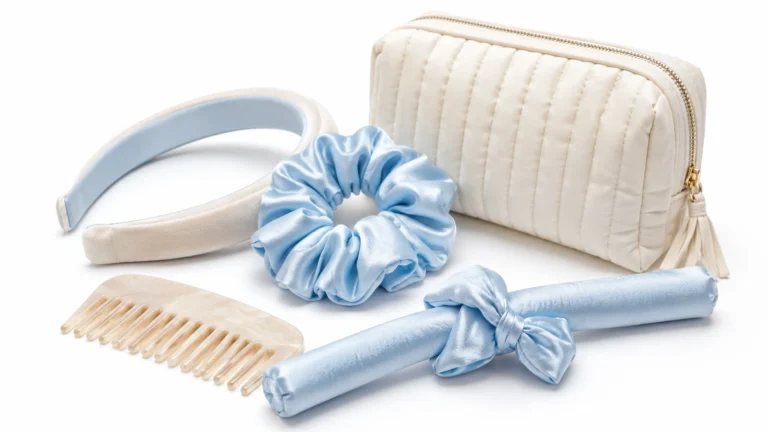
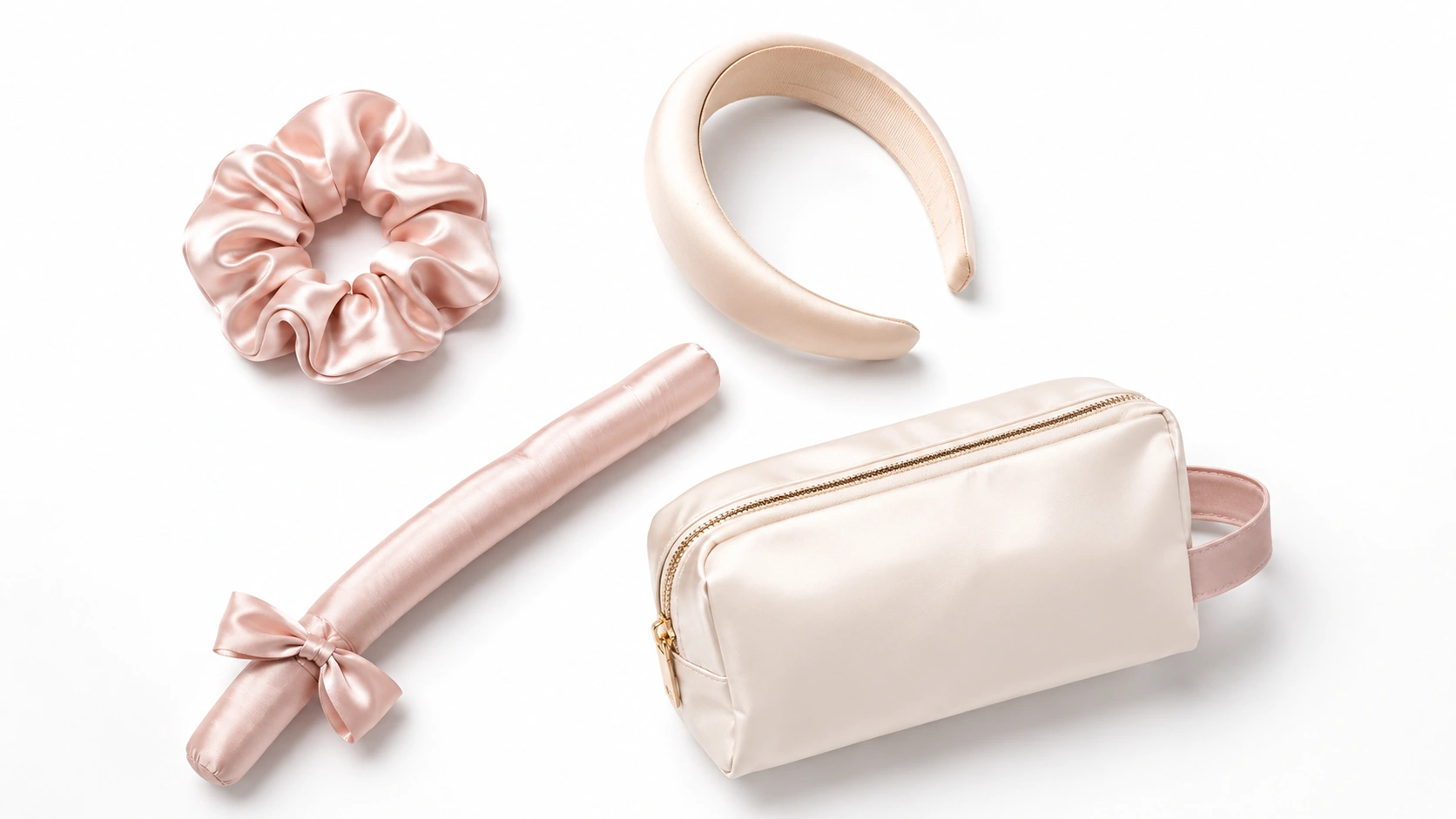
For buyers developing product sets, the structure should match the use case. A single clip can work for simple retail. A two-piece or three-piece set can add value and improve sell-through in gift channels. Some brands pair one main French twist tool with two support pins and a printed instruction card. Others build a broader beauty kit with a clip, a comb, and a storage pouch. That combination helps the buyer create a French Twist story that is easy to merchandise and easy for the end user to understand.
- Use acetate or resin when the range needs fashionable colors and stronger shelf appeal.
- Use plastic when the program needs lower cost, lighter weight, and broader MOQ flexibility.
- Use metal when the product must feel secure, slim, and more durable in repeated use.
- Use pearl or rhinestone details when the buyer wants bridal, gift, or occasion positioning.
- Use satin, velvet, or organza accents when the accessory needs a softer premium presentation.
Buyers should also consider hair type and styling behavior. A French twist accessory for thick hair needs more grip and a stronger profile. A French twist comb for short hair should be compact enough to anchor the twist without showing too much hardware. A product aimed at modern everyday wear should create a neat silhouette without making the hairstyle feel heavy. Step by step, the accessory should do the holding work while the finished style stays sleek.
At this stage, many sourcing teams review a broader category page before narrowing the final SKU list. The hair accessories collection on https://blaccessory.com/ is a useful starting point for buyers mapping product types against retail and private label needs.
Custom branding, packaging, and private label options
For private label development, the accessory itself is only half the product. The other half is the branding system around it. OEM and ODM buyers typically ask for custom color matching, logo plate application, woven labels, hang tags, display cards, and packaging that can support both wholesale shipping and retail presentation. A French twist item that ships in a plain bag may work for trade orders, but a retail-ready version needs a cleaner story.
Packaging choices should be matched to the channel. OPP bags are practical for bulk and warehouse handling. Display cards make small accessories easier to hang and scan in stores. Retail hanging cards work well when the buyer wants a simple shelf or peg display. Gift boxes are better for bridal, holiday, or premium gift sets. Barcode labels can help with retail operations, especially when the product will move through chain-store or distribution workflows.
Branding should also be coordinated with the product finish. A matte clip with a minimal logo plate can feel more modern. A glossy resin piece may benefit from a printed card with a color story or usage note. Pearl and rhinestone accessories usually need packaging that protects the decoration and prevents scratches. If a buyer is developing a display set, the packaging should also preserve the visual balance of the assortment rather than crowding the product.
Q&N Fashion Accessory can support this kind of private label planning by aligning the accessory shape, the color palette, and the packaging format to the buyer’s sales channel. That matters when the same style may be sold as an impulse item, a bridal add-on, or part of a branded gift kit.
- Custom color planning helps seasonal lines stay coordinated with retail campaigns.
- Logo plates and hang tags help the product carry a stronger brand message.
- Display cards and gift boxes improve shelf clarity and premium perception.
- Barcode labels and pack-ready inserts help wholesale orders move more smoothly.
When buyers want a branded collection, they usually get better results by deciding packaging first, then confirming the structure of the accessory. That sequence makes it easier to create a modern product that looks consistent from sample to bulk.
Supplier evaluation, MOQ, sampling, lead time, and QC
Before placing a bulk order, wholesale buyers should evaluate the supplier on product control, not just on price. The first check is whether the supplier understands the styling use case. A French twist tool is small, but it still needs the right balance of shape, tension, and finish. The second check is whether the supplier can keep the same look across repeat orders. The third check is whether the packaging and labeling plan can be repeated without color drift or print misalignment.
Sampling is where many sourcing mistakes can be avoided. Buyers should confirm material, size, edge smoothness, logo placement, and grip strength before approving bulk production. For a hair accessory for french twist, the sample should be tested on different hair thicknesses if possible. A clip that looks fine on a table may not hold the twist properly in real use. The same is true for combs and pins, where the finish quality can affect both comfort and appearance.
MOQ and mold cost also matter. If the buyer wants a custom shape, a new mold may be required, and that changes the budget structure. If the buyer only needs a custom color or package update, the entry point may be easier. Lead time should be confirmed after sample approval, because production speed can change depending on the complexity of the material, plating, decoration, and packing method. QC should include not only accessory function but also carton count, label accuracy, and packaging consistency.
- Check grip strength on fine, medium, and thick hair samples.
- Confirm material and finish under close inspection and normal lighting.
- Review logo proofing and package layout before mass production.
- Ask how the supplier handles color consistency across repeat orders.
- Confirm packing standard, carton marks, and final inspection steps before shipment.
A practical B2B buyer should also ask how the supplier handles reorder stability. A good French twist line is not just a one-time sample win. It needs the same color tone, the same finish quality, and the same packaging fit on the second order and the third order. That is where a supplier’s production discipline becomes more valuable than a low first-order price.
Practical sourcing recommendations for wholesale buyers
When comparing sourcing options, start with the end channel and work backward. Retail fashion brands usually need stronger visual identity. Salon buyers usually need functional hold and quick usability. Bridal buyers usually need a refined finish and protective packaging. Promotional buyers usually need low-friction ordering and simple branding. Once the use case is clear, the product choice becomes easier.
One useful approach is to build the line in layers. Start with one core product, such as a French twist clip or French twist comb. Add a second SKU for a different hair type or style preference. Then add a small set version with packaging that can support a giftable presentation. This creates a cleaner assortment than launching too many variations at once.
Buyers should also think beyond the item itself and compare the complete supply package: sample timing, MOQ, packaging options, and reorder consistency. A supplier such as Q&N Fashion Accessory is most valuable when it can help buyers align those details without forcing separate vendors for product and packaging. For a deeper look at the broader assortment, buyers can also review the main site and the hair accessories category.
Practical sourcing checklist for today’s buyer:
- Define whether the product is for retail, salon, bridal, gifting, or promo use.
- Choose the accessory format that best supports the French twist hairstyle.
- Request a sample set with the final color, logo, and package format.
- Compare MOQ, mold cost, and repeat-order stability before approving the line.
- Confirm QC checkpoints for grip, finish, label placement, and packaging accuracy.
When those steps are handled in order, the buyer can create a cleaner product launch and avoid last-minute packaging changes. That is especially useful for private label programs that need a modern, sleek presentation and predictable replenishment.
Frequently Asked Questions
What clip do you use for a French twist?
For wholesale and private label sourcing, the most common choices are a French twist clip, a French twist comb, or a slim French pin. The best option depends on the target user. A clip usually gives quicker styling and broader retail appeal, while a comb or pin can create a more classic, minimal look. Buyers should choose based on hair thickness, grip requirement, and whether the product needs to be visible or hidden in the finished style.
What is the hair tool for French twist?
The classic hair tool for French twist styling is the French pin or U-pin, but many buyers now source comb-style and clip-style versions as well. In B2B assortments, the tool should match the brand story. A salon-oriented range may favor function-first metal pieces, while a fashion or gift line may work better with acetate, pearl, or decorated versions. The packaging should explain the tool clearly so the end user understands how it supports the hairstyle.
What is needed for a French twist?
A practical French twist accessory set usually needs one main holding piece and, depending on the design, one or two support pins. For retail or gift sets, buyers often add a display card, an instruction insert, or a small storage pouch. If the target customer is a private label beauty brand, the product should also include a clear packaging plan, logo placement, and a size spec that can be repeated in bulk.
How do you hide the clip in a French twist?
Hiding the clip starts with choosing a slim profile and a color that blends with the hair or the styling concept. The accessory should sit under the twist rather than on top of it, and the finish should not be too reflective unless that is part of the design. For premium styling sets, matte metal, dark resin, or color-matched acetate can make the support piece less visible while still keeping the twist secure.
What should wholesale buyers check before ordering French twist hair accessories?
Wholesale buyers should check material quality, grip strength, edge smoothness, color consistency, logo application, and package fit. It is also important to review the sample on different hair types before bulk approval. A product can look strong in a photo but still fail if the spring tension is too weak or the finish is too rough. Buyers should also confirm MOQ, packaging method, and reorder consistency before they move to production.
Can Q&N Fashion Accessory support private label French twist sets?
Yes. Buyers developing private label beauty kits can use Q&N Fashion Accessory for product development, packaging coordination, and repeat-order planning. The key is to define the target channel first, then confirm the material, finish, logo method, and retail presentation. For a broader view of product directions, buyers can review https://blaccessory.com/hair-accessories/ as a starting point for assortment planning.